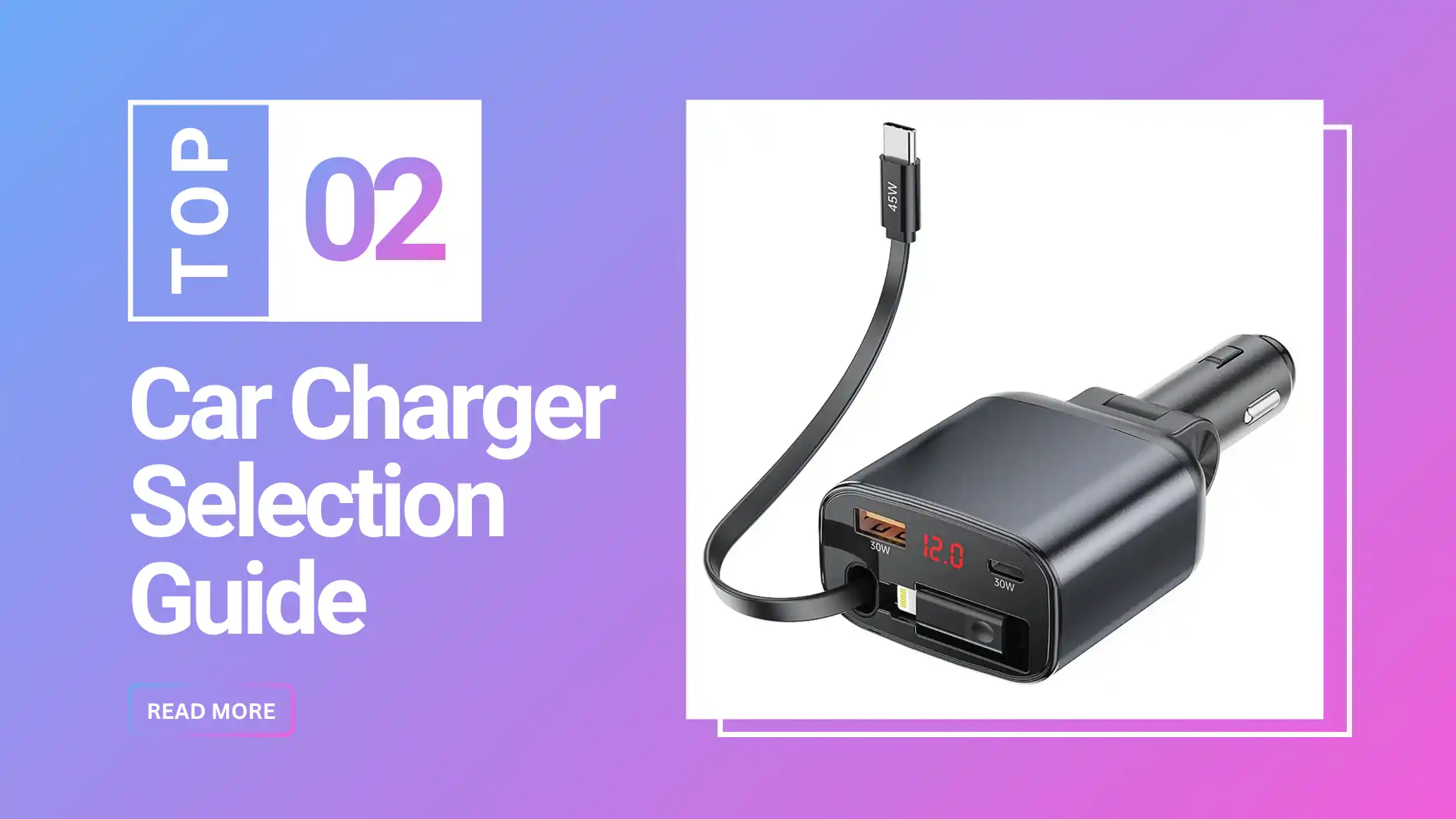
Why Car Chargers Matter for Your Business
In today's mobile-first world, reliable in-vehicle charging has become a non-negotiable requirement for both consumers and professionals. Whether you're outfitting a commercial fleet, sourcing products for retail distribution, or procuring accessories for corporate use, the right car charger selection can significantly impact user satisfaction and operational efficiency.
For B2B buyers, understanding the technical nuances of car charging technology is essential for making informed procurement decisions that balance performance, safety, and cost-effectiveness.
Why Fast Charging Matters in Your Vehicle
With commute times getting shorter, efficiency is paramount. Drivers need quick charging during limited travel time. Modern devices from 65W laptops to the latest iPhones demand more power than ever.
USB-C Power Delivery
Up to 100W fast charging
Quick Charge 4.0
Optimized for Android devices
PPS
Programmable Power Supply
Learn more about USB-C PD Fast Charging Guide →
3 Critical Safety Features for Car Chargers
Professional buyers prioritize safety to avoid returns and liability issues. Here are the essential features:
Over-Current Protection (OCP)
Prevents damage to the vehicle's electrical system. High-quality chargers automatically shut down if current exceeds safe levels, protecting both the car and connected devices.
Thermal Management
Metal shells offer superior heat dissipation compared to plastic. Look for aluminum alloy housings that keep temperatures 20-30% lower during high-power charging, extending component lifespan.
Fire-Retardant Materials
Ensure the PC/ABS shell meets V0 safety grades (UL94 standard). This prevents fires in extreme conditions and is mandatory for European and American market compliance.
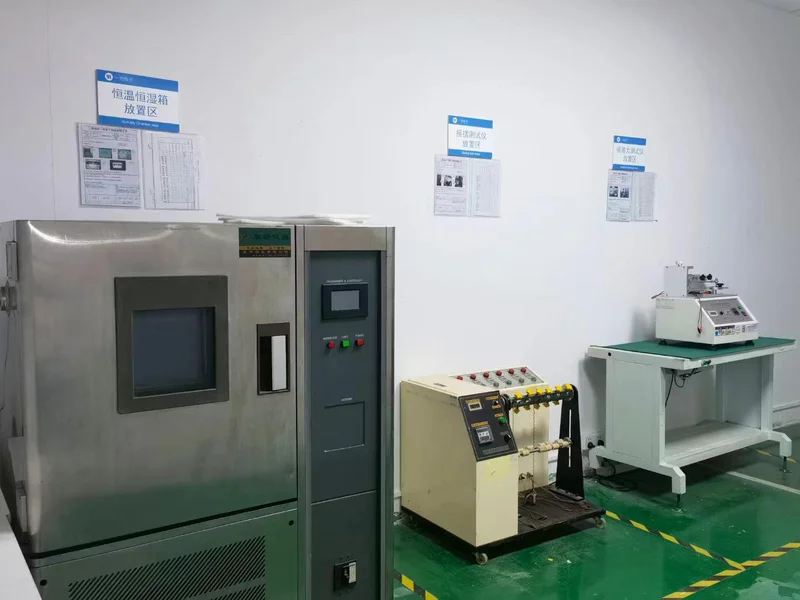
Thermal testing ensures safety certification compliance (CE, FCC, UL94 V0)
Comparing Dual Port vs. Single Port Car Chargers
| Feature | Single Port | Dual Port |
|---|---|---|
| Best For | Single device, laptop charging | Multiple devices, passengers |
| Power Output | Up to 65W+ | 20W+ per port |
| Price Point | Lower | Moderate |
| Complexity | Simple | Smart chip required |
The Rise of Retractable Car Chargers
Traditional cables clutter the car console. Our Patented Retractable Car Chargers solve this by integrating the cable directly into the housing, offering a clean and premium experience for luxury car interiors.
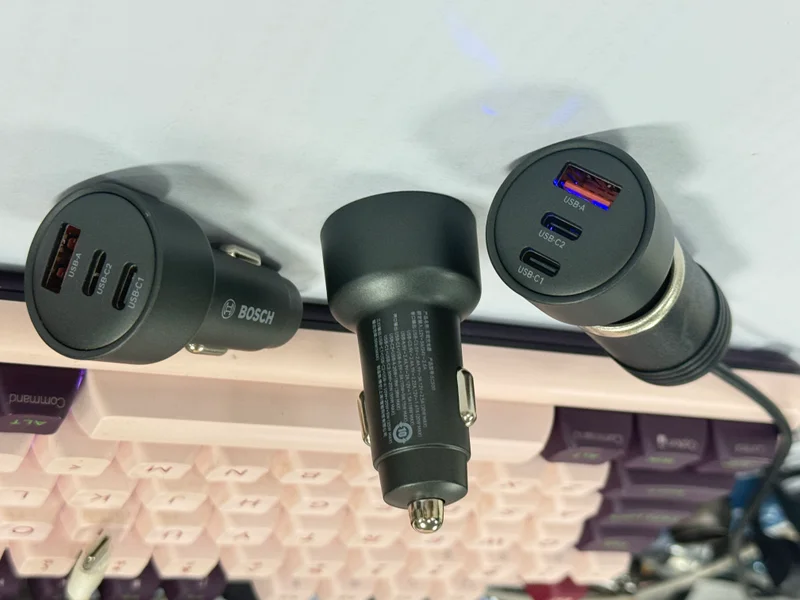
Premium 85W car charger with LED indicator
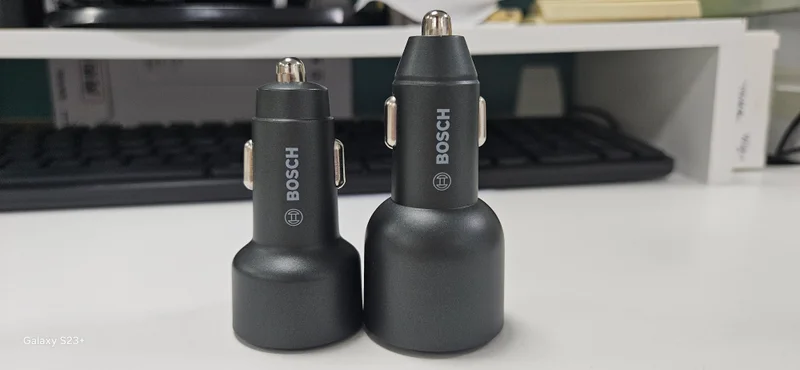
Compact design fits any car interior
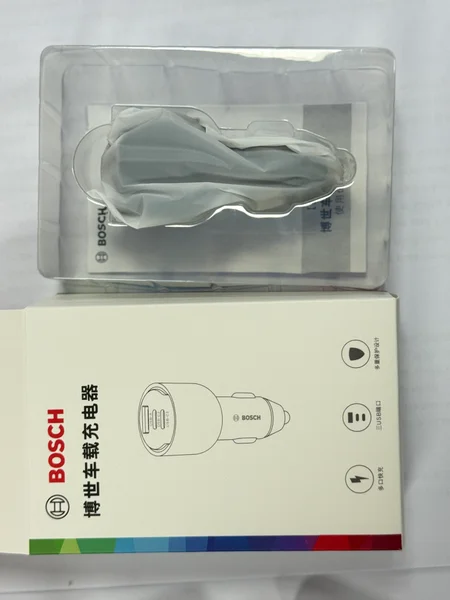
Retail-ready packaging for B2B wholesale orders
Key Features to Consider
Total Output Power
Measured in watts. Higher wattage equals faster charging speeds. For modern devices, look for 20W minimum for single-device fast charging. 30-45W configurations are ideal for multiple devices or power-hungry gadgets like tablets and laptops.
Port Types
USB-A remains common for legacy devices and older charging cables. USB-C with Power Delivery (PD) delivers the fastest charging speeds available. Multi-port configurations allow simultaneous charging of several devices, which is particularly valuable for fleet applications.
Fast Charging Protocols
Quick Charge (QC) technology, developed by Qualcomm, is optimized for Android devices and offers multiple generations (QC 3.0, 4.0, 5.0). Power Delivery (PD), managed by the USB Implementers Forum, is the universal standard for iPhone, iPad, Android flagships, and USB-C laptops. Learn more about USB standards.
Safety Features
Essential safety certifications include over-current protection (OCP), over-voltage protection (OVP), over-temperature protection (OTP), and short-circuit protection. These features protect both the charger and connected devices. Look for products meeting UL safety standards or equivalent certifications for enterprise procurement.
USB-C vs USB-A Car Chargers: Making the Right Choice
Understanding the differences between USB-C and USB-A car chargers is fundamental for procurement decisions. USB-A ports, introduced in the late 1990s, use a rectangular connector that has become ubiquitous but is limited in power delivery capability. Maximum output typically caps at 12W (5V/2.4A), which is insufficient for modern fast charging requirements.
USB-C represents the modern standard, offering reversible connectors and significantly higher power delivery up to 100W or more. The USB Power Delivery specification enables rapid charging for smartphones, tablets, and laptops from a single compact device.
B2B Recommendation
For new inventory and fleet procurement, prioritize USB-C PD chargers. Legacy USB-A support can be maintained through dual-port configurations, but USB-C adoption accelerates device compatibility for future purchases.
PD Car Charger Specifications Explained
Power Delivery (PD) car chargers have become essential for professional environments where mobile devices and laptops require reliable, fast charging during travel. Understanding PD specifications helps procurement teams select appropriate models for their user populations.
PDO (Power Delivery Objects)
PD chargers communicate with devices using Programmable Power Supply (PPS) technology, allowing dynamic voltage adjustment for optimal charging efficiency. Common PDO configurations include:
- 5V/3A (15W): Basic charging for older smartphones and small devices
- 9V/3A (27W): Standard fast charging for most modern smartphones
- 15V/3A (45W): Tablet charging and rapid smartphone fast charging
- 20V/3.25A (65W): Laptop charging capability via USB-C
- 20V/5A (100W): High-power devices including professional laptops and multiple-device charging
GaN Technology
Gallium Nitride (GaN) chargers offer significant advantages over traditional silicon-based designs. GaN chargers are smaller, more efficient, and generate less heat. For fleet applications, compact GaN chargers reduce dashboard clutter while delivering higher power outputs. IEEE research on GaN semiconductor applications demonstrates efficiency improvements of 10-20% compared to silicon alternatives.
Retractable Cable Technology
Retractable cable car chargers represent an innovative solution for fleet managers and businesses prioritizing cable management and device longevity. These chargers feature built-in cable mechanisms that extend and retract with a gentle pull, eliminating loose cables that can distract drivers or damage ports.
The mechanical retraction system typically utilizes spring-loaded mechanisms with adjustable length stops, allowing users to extend only the cable length needed. For OEM/ODM customization, retractable chargers offer unique branding opportunities through customizable cable lengths, connector types, and housing colors.
Advantages
- • Clean, organized appearance
- • Reduced cable wear and tear
- • Minimized driver distraction
- • Portable cable management
Considerations
- • Higher unit cost than standard
- • Mechanical complexity
- • Limited cable length options
- • Replacement if mechanism fails
Vehicle Compatibility Guide
Vehicle electrical systems vary significantly between manufacturers and models. Understanding these differences helps procurement teams select appropriate chargers and avoid compatibility issues in fleet deployments.
Socket Types
12V Sockets (Cigarette Lighter)
Standard in most vehicles worldwide. Delivers 10-15W typically. Universal compatibility. Ideal for basic to mid-range chargers.
USB Direct Ports
Increasingly common in new vehicles. Native USB-A or USB-C connectivity. May support higher power delivery than traditional sockets.
24V Systems (Commercial Vehicles)
Standard in trucks, buses, and commercial vehicles. Requires 24V-compatible chargers. Higher voltage demands specialized components.
Wireless Charging Pads
Integrated Qi charging in center consoles. No cables required. Slower than wired charging but convenient for supported devices.
For fleet operators managing diverse vehicle types, multi-standard chargers that accommodate various socket types ensure consistent charging capability across all assets.
Fleet Management Considerations
Enterprise fleet operations have unique requirements that differ significantly from consumer purchases. When sourcing car chargers for commercial fleets, consider these operational factors:
Durability Requirements
Commercial use demands chargers that withstand continuous plugging cycles, temperature extremes, and physical stress from vehicle vibration. Look for industrial-grade components with extended warranty coverage.
Volume Pricing
Fleet procurement typically involves 100+ units, enabling significant volume discounts. Wholesale car charger pricing structures reward bulk purchases with per-unit savings of 30-50% compared to single-unit retail.
Brand Consistency
Custom branding on chargers extends your company's visual identity to frequently-used accessories. Custom packaging, logo printing, and branded documentation reinforce corporate image across your fleet.
Standardization Benefits
Standardizing on single charger models across your fleet simplifies inventory management, reduces support complexity, and enables efficient replacement ordering when units fail.
Safety Features: Protection Specifications
Safety certifications and protection mechanisms are non-negotiable for professional procurement. Consumer Product Safety Commission reports indicate that substandard chargers cause thousands of electrical incidents annually.
Over-Current
Prevents damage from excessive current flow. Auto-shutdown when limits exceeded.
Over-Voltage
Protects devices from voltage spikes. Voltage clamping technology.
Over-Temperature
Thermal shutdown prevents overheating. Built-in heat dissipation.
Certification Standards
Essential certifications for international markets include CE (European compliance), FCC (US electromagnetic compatibility), RoHS (hazardous substance restriction), and KC (Korean safety). For UK market compliance, UKCA marking is required post-Brexit.
Sourcing Car Chargers from China
China remains the dominant manufacturing hub for electronic charging accessories, with the Shenzhen region housing thousands of specialized manufacturers. Factory-direct sourcing offers significant advantages for volume procurement:
Sourcing Strategy Comparison
| Method | Pros | Cons |
|---|---|---|
| Direct Factory | Best pricing, customization, QC control | Higher MOQ, communication barriers |
| Trading Company | Lower MOQ, English support, faster shipping | Higher prices, less factory visibility |
| B2B Platforms | Easy sourcing, many options | Quality inconsistency, IP risks |
| Industry Events | Direct relationships, sample verification | Travel cost, time investment |
Quality Verification
Implement systematic quality control processes when sourcing from Chinese manufacturers. Request production samples before bulk orders, conduct third-party inspections (SGS, Bureau Veritas), and establish clear specifications in written agreements. ISO 9001 certification indicates manufacturers with documented quality management systems.
Payment Terms
Standard payment terms for Chinese manufacturing include 30-50% deposit with balance paid before shipping (T/T). For new supplier relationships, consider using Alibaba Trade Assurance or letter of credit for added protection.
WOWOHCOOL Car Charger Manufacturing

Automated production line with 50,000+ monthly capacity

Precision welding for durable construction
Types of Car Chargers
Plug-in Type
Fits into the cigarette lighter socket or 12V accessory outlet. The most common and versatile option. Easy to install, remove, and transfer between vehicles. Ideal for personal use and fleet standardization.
Integrated/Dashboard Type
Professional installation into vehicle dashboard. Provides a cleaner aesthetic with no visible cables. Common in commercial fleet modifications and fleet management solutions.
Wireless Mount Charger
Combines Qi wireless charging with a phone mount. Charges devices while providing GPS navigation visibility. Ideal for sales teams and field service personnel who use navigation during drives.
Multi-Port USB Hub
Multiple USB ports (typically 4-6) accommodate several passengers simultaneously. Essential for rideshare drivers, family vehicles, and executive transport where multiple devices require charging.
Quick Selection Guide
| Use Case | Recommended Specification | Example Application |
|---|---|---|
| Single smartphone | 18-20W single port USB-C | Personal vehicle, sales representative |
| iPhone + Android dual users | 30W dual port USB-C PD | Couple or business partners sharing vehicle |
| Laptop charging | 45-65W USB-C PD single port | Mobile professionals, executive transport |
| Family/Multi-passenger | 4+ port hub, 60W total | Rideshare, family vehicle, airport shuttle |
| Commercial fleet | 65W GaN, dual port, branded | Delivery vehicles, service fleet, logistics |
| 24V commercial vehicle | 24V compatible, 45W+ output | Truck fleet, bus fleet, commercial transport |
Ready to Source Car Chargers for Your Business?
WOWOHCOOL offers factory-direct OEM car chargers with custom branding, volume pricing, and global shipping. Get your free quote within 24 hours.
View Car Charger Products Contact Us
Supply Chain Expert · Wireless Charging Specialist
Nico Gung is a supply chain management expert with 10+ years experience helping global B2B clients source quality car chargers from WOWOHCOOL — a premium charging solution specialist in Shenzhen, China with certified models and industry-leading quality standards.
Free Resource: Car Charger Quality Inspection Report Template
Download our professional QC checklist used by Fortune 500 brands. This comprehensive template covers 35+ inspection points including safety tests, performance metrics, and compliance verification.
Stay Updated
Get the latest B2B charging insights, industry trends, and exclusive sourcing guides delivered to your inbox.
No spam, unsubscribe anytime.