
Factory Verification Checklist: How to Audit China Manufacturers

Supply Chain Expert · 10+ years in OEM/ODM Manufacturing
A low price quote is meaningless if the factory lacks the infrastructure for quality. Whether you are sourcing high-power GaN Chargers or magnetic Wireless Pads, use this 2026 audit guide to separate professional manufacturers from small trading workshops.
Key Takeaways
- 5-stage factory verification process: (1) desktop research (business license, export records, certification database check), (2) video call walkthrough (verify production floor matches website photos), (3) sample evaluation (request production-line samples, not hand-picked engineering samples), (4) third-party audit (SGS/BV/TUV, $300-800 per man-day), (5) first-article inspection before mass production. Skipping any stage shifts risk to you.
- 6 red flags that disqualify a factory immediately: (1) refuses video tour of production floor within 24 hours, (2) business license shows "trading company" registration, not "manufacturing", (3) can't provide 3 verifiable customer references in your target market, (4) quotes 50%+ below market average, (5) factory address on the business license doesn't match the actual production location, (6) no English-speaking quality engineer on site.
- Document verification checklist before visiting: business license (check registration date, factories under 2 years old have higher failure risk), ISO 9001 certificate (verify on issuing body's database), export license, and at least 2 active product certification certificates (CE/FCC/UL). Cross-reference the factory name on all documents, inconsistent names across documents = shell company risk.
- On-site inspection: 6 areas to photograph: (1) SMT line (confirm they own it, not outsourced), (2) testing station (hipot tester, aging racks, thermal chamber), (3) component warehouse (check for counterfeits, look for misaligned labels, inconsistent date codes), (4) assembly line worker count and work density, (5) finished goods QC area, (6) shipping/packing area. If any area is "under renovation" or "not available today," that's the area hiding problems.
Table of Contents
Sourcing electronics from China can be highly profitable. But it also carries real risks. Fake factories, counterfeit certifications, and outright scams cost importers an estimated $4.2 billion annually. For any buyer sourcing GaN chargers, wireless pads, or power banks, the stakes are high.
According to the International Chamber of Commerce, roughly 30% of B2B platform suppliers claiming to be manufacturers are actually trading companies. About 30% of first-time China importers run into supplier issues in their first year. A standard third-party factory audit costs $300-800, a fraction of what a failed order costs. Most of these problems are preventable with a clear, systematic verification process.
According to a 2024 Alibaba supplier quality report, only 12% of electronics suppliers on B2B platforms pass comprehensive third-party factory audits. A 2024 China General Administration of Customs report shows Shenzhen port alone exported over $12 billion in phone and charger accessories, reflecting both the scale of opportunity and the volume of suppliers competing for your business.
This checklist covers every step of verifying a Chinese electronics manufacturer. It walks you through basic documents, factory audits, QC systems, compliance standards, and trading company detection. Use it as your roadmap, whether you are checking suppliers from afar or visiting the factory in person for an OEM/ODM audit. Every section gives you clear actions you can take right away, no matter your experience level. By the end, you will know exactly how to separate a real ISO 9001 factory from a trading company with a showroom.
1. How to Audit a Factory Production Line?
Different power accessory categories require specialized verification points. Use this category-specific checklist to audit factories for your specific product type:
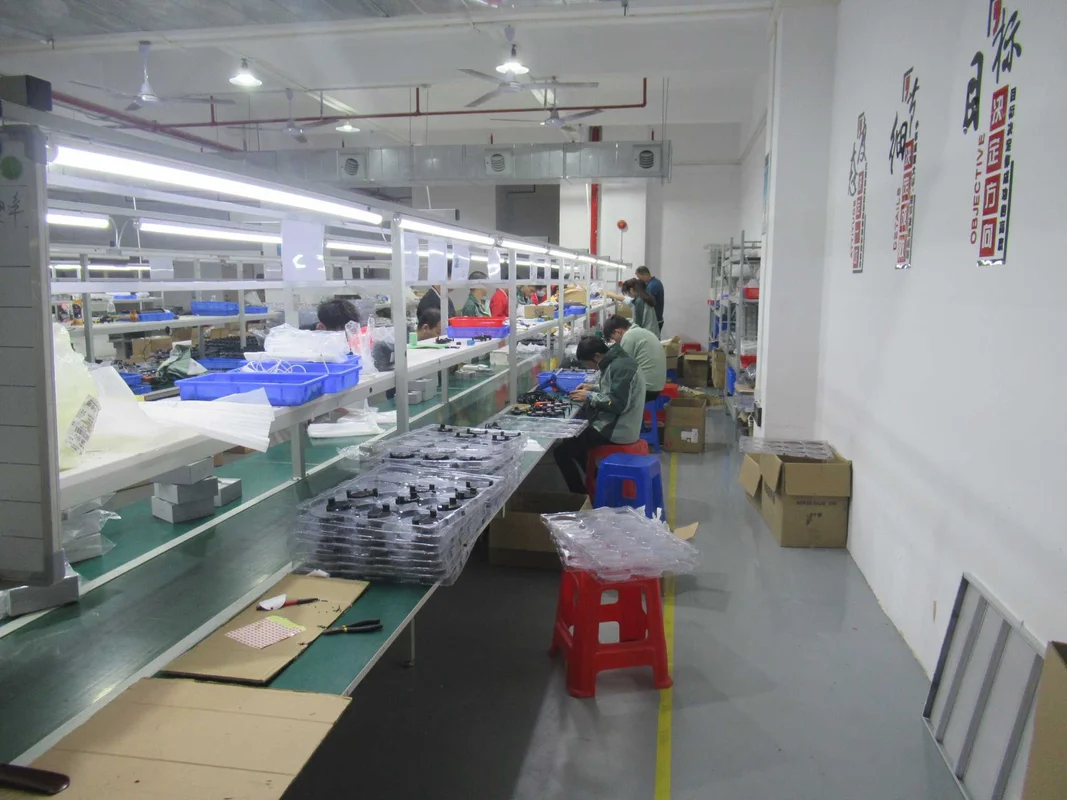
Power Bank Verification Points
OEM Capability Requirements
- , Private mold (private tooling) design capability
- , Battery cell sourcing partnerships (Samsung, LG, ATL)
- , PCB layout and protection circuit design
Production & QC
- , Fire-proof Li-ion cell storage area
- , UN38.3 testing capability
- , OQC (Outgoing Quality Control) records
Wireless Charger Verification Points
OEM Capability Requirements
- , Qi/WPC certification database listing
- , FOD (Foreign Object Detection) testing equipment
- , Magnetic alignment fixture calibration
Production & QC
- , Coil winding machines (automated preferred)
- , Qi test stations for certification
- , Temperature cycling chambers
GaN Charger Verification Points
OEM Capability Requirements
- , High-frequency transformer design capability
- , Thermal management engineering
- , PD protocol integration (Navitas, Pi, etc.)
Production & QC
- , Chroma load testing machines
- , Thermal cameras for heat dissipation
- , -hour minimum aging test rooms
Car Charger Verification Points
OEM Capability Requirements
- , Multi-port PD protocol support
- , Vehicle integration testing capability
- , Over-voltage/over-current protection design
Production & QC
- , Salt spray testing equipment (corrosion)
- , Load testing for all ports simultaneously
- , 2V/24V vehicle compatibility testing
2. Quality Control Laboratory Equipment Checklist
A professional factory must invest in proper testing equipment. Here's what to look for:
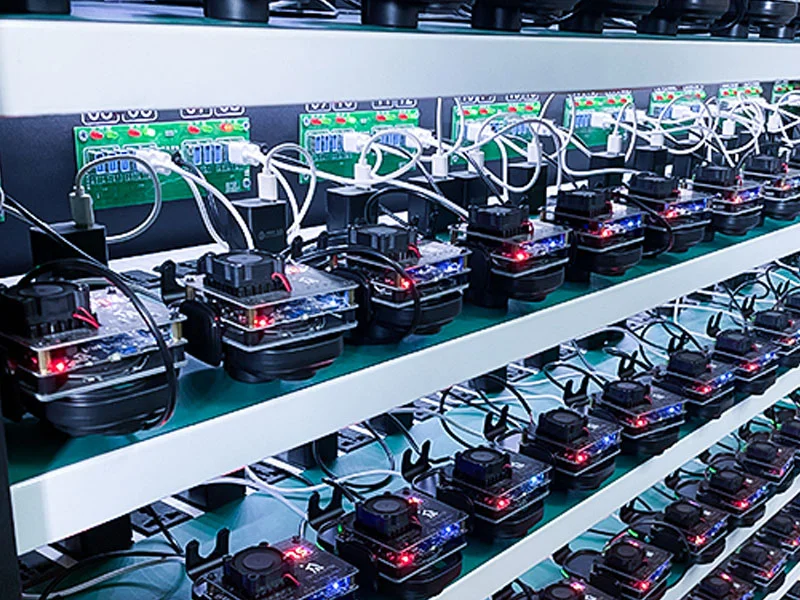
Aging test rooms for 100% burn-in testing
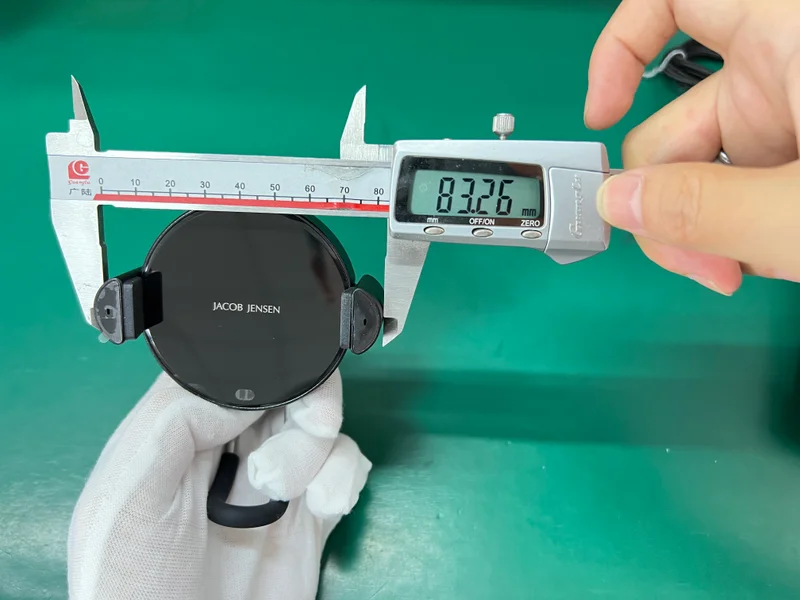
AOI machines and QC testing stations
Essential Lab Equipment for Power Accessory Factories
Chroma Load Tester
For GaN charger PD protocol testing
Salt Spray Chamber
For Car Charger metal corrosion testing
Temperature Chamber
For Power Bank stability testing
Hi-Pot Tester
For electrical safety insulation testing
EMC Test Equipment
For FCC/CE pre-compliance scans
AOI Machines
For PCB inspection automation
3. Document Verification Checklist
Before engaging deeply with any supplier, you must verify their legal existence and business credentials. This foundational step prevents most common scams and ensures you're dealing with a legitimate business entity that can be held accountable.
4. How to Detect a Trading Company Posing as a Factory
One of the most common and costly mistakes in China sourcing is believing you are dealing with a factory when you are actually talking to a trading company. Trading companies serve a legitimate role, but when they pretend to be manufacturers, inflating prices, hiding the real production source, and adding layers of miscommunication, your business pays the price. An estimated 30% of B2B platform suppliers claiming to be manufacturers are actually intermediaries. Here is how to tell the difference.
Registered Capital Analysis
In China, registered capital is a strong signal of entity type. Manufacturers typically register at ¥1-10 million to support equipment, raw materials, and workforce investment. Trading companies commonly register at ¥100,000-500,000, enough for an office and inventory purchases, but not for production infrastructure.
Verify registered capital on gsxt.gov.cn or through Tianyancha. If the registered capital is under ¥500,000 and the company claims to operate a factory with SMT lines, molding equipment, and QC labs, something does not add up.
Red flag: The factory claims 200+ employees and 50M+ monthly capacity, but registered capital is only ¥200,000.
Business Scope Verification
Every Chinese business license includes a "business scope" field. A real manufacturer's scope includes terms equivalent to "production," "manufacturing," or "processing." A trading company's scope lists "sales," "wholesale," or "import/export" without production terms. A company that only has trading scope but calls itself a factory is misrepresenting itself.
Pro tip: If the business scope includes 10+ unrelated categories, electronics, clothing, furniture, toys, the entity is almost certainly a trading company, not a specialized manufacturer.
Product Range Breadth Check
Real factories specialize. A genuine charger manufacturer produces chargers, power banks, and related charging accessories, not also clothing, furniture, and kitchenware. If a supplier's catalog spans 5+ unrelated product categories, they are aggregating from multiple factories. This means inconsistent quality, no direct production oversight, and higher prices from middleman margins.
Verify: Browse their full product catalog. Count distinct product categories. More than 3 unrelated categories is a warning sign.
Physical Facility Indicators
During on-site visits or video tours, look for these factory indicators: loading docks with trucks, raw material storage areas, production equipment noise, worker uniforms with the company name, and factory-floor signage matching the business license entity.
Trading company warning signs: a pristine showroom with no production equipment behind it, conference rooms but no workshop floor, equipment nameplates that show a different company, and "we just moved" or "renovating" excuses that prevent production floor access.
Critical check: A factory with a beautiful showroom but minimal production equipment visible is likely a trading company. Real factories show wear, production is not pristine.
Utility Bill & Overhead Verification
Real manufacturing consumes significant electricity. A factory with SMT lines should have monthly electric bills in the ¥10,000-50,000+ range. A trading company's office electricity bill typically runs under ¥3,000/month. Request to see recent utility bills during verification. Industrial electricity rates and consumption patterns are hard to fake.
Ask for: Last 3 months of electricity bills. Cross-reference the meter address with the factory address on the business license.
Employee Count vs. Claimed Capacity
If a factory claims 1M+ units monthly but you count fewer than 50 workers during a tour, the math does not work. A rough rule: each production worker contributes roughly 2,000-5,000 units monthly depending on product complexity. Use this to sanity-check claims. Also verify social insurance registration records, the number of employees registered for social insurance is publicly accessible through Tianyancha and should roughly match their claimed workforce.
Dropshipping vs. Manufacturing: The Sample Test
Request a sample with a small, specific customization, a different cable color, a logo engraving, a slightly modified LED indicator. A real factory can accommodate minor customizations within 7-14 days because they control the production line. A trading company needs weeks because they must relay the request to their supplier. If they claim "no customization available" for any minor change, they are likely not manufacturing.

WOWOHCOOL professional office and showroom - ISO 9001 certified since 2013
5. How to Verify Certification Authenticity?
Counterfeit certifications are rampant in Chinese manufacturing. Fake certifications are a real problem. A factory may show impressive certificates on their website. But many are forged, expired, or simply do not apply to the products you need. Always verify every certification yourself. There is no substitute for independent checks when protecting your business. For complete certification requirements per market, see our US & EU certification guide and charger safety standards reference.
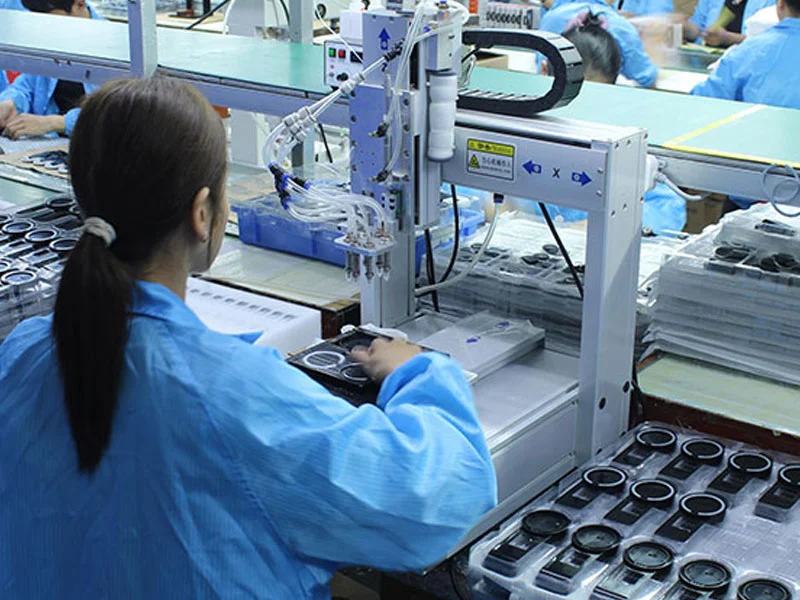
Verify certifications through official databases, not just factory-provided documents
Official Verification Resources
Use these authoritative databases to verify certifications independently:
- ISO Certificate Verification - Verify quality management certifications
- Qi Certified Product Database - Verify wireless charging compatibility
- CE Marking Guide - Understand European compliance requirements
- FCC SDoC Database - Verify US radio frequency compliance
- CNAS Database - Verify Chinese accreditation bodies
6. Remote Factory Verification: Video Audit Best Practices
Not every buyer can visit Shenzhen in person. Video-based remote audits, now standard practice since 2020, let you verify a factory from anywhere in the world. When done correctly, a video audit reveals 80% of what an on-site visit would. When done poorly, it confirms nothing. Use this protocol to make your remote verification count.
Cost benchmark: A professional on-site factory audit by Bureau Veritas, SGS, or TUV costs $300-800 per auditor per day. A self-conducted video audit costs nothing but your time. For orders under $10,000, a thorough video audit is usually sufficient. For orders above $10,000 or first-time partnerships, consider combining a video audit with a third-party on-site verification.
Live Video Tour: What to Request
Do not accept pre-recorded footage. Request a live, real-time video call (WeChat, Zoom, or WhatsApp). Ask the factory contact to start outside the building, show the entrance sign, street name, and building number, then walk continuously inside to the production floor. The transition should be seamless with no cuts. Request they show:
- - The company sign at the building entrance (match it to the business license)
- - SMT lines in operation (count the machines while they run)
- - QC testing stations with equipment powered on
- - Aging test room with products actively under burn-in
- - Raw material storage area (empty shelves = no real production)
- - Packaging line with finished goods (check for other brands' logos)
- - Worker count on the floor (pan slowly, do not let them stage a section)
Same-Day Proof Techniques
To confirm the video is live and at the claimed location, use these verification techniques. Ask the contact to write your company name and today's date on a whiteboard or piece of paper and hold it up on camera inside the production area. Request they show a current local newspaper. Ask them to pan to a specific machine or workstation you name on the spot, a pre-recorded video cannot accommodate spontaneous requests. If they hesitate or make excuses for any of these requests, treat it as a red flag.
Satellite & Map Cross-Reference
Before the video call, pull up the factory address on both Google Maps (satellite view) and Baidu Maps (often more up-to-date for China locations). Look for: industrial zoning, visible loading docks, building size consistent with claimed capacity, and factory signage visible from street view. During the video call, compare what you see against the satellite imagery. A factory address that maps to a residential building or a small office tower is a trading company.
Pro tip: Baidu Maps street view in Shenzhen industrial areas is updated more frequently than Google. Cross-reference both.
Video Audit Red Flags
- - Contact refuses live video, offers only photos
- - "Factory is too busy for video tours right now"
- - Video quality degrades when you ask to see specific areas
- - Contact cannot show the building exterior
- - You hear production noise but see no machines running
- - Equipment nameplates show a different company
- - Workers appear staged, standing still, not working
- - Contact uses "we" for the factory but is clearly at a desk
When a Video Audit Is Not Enough
Video audits work well for verifying a factory's existence, basic production capability, and transparency. They cannot replace on-site inspection for: measuring defect rates, verifying working conditions, testing equipment calibration, auditing financial records, or confirming raw material authenticity. For orders above $50,000 or when launching a flagship product line, commission a third-party audit from Bureau Veritas, SGS, TUV, or Intertek. The $300-800 cost is insurance against a failed order.
EXPERT INSIGHT
"A factory that refuses a video tour or third-party audit isn't hiding one problem, they're hiding a pattern. In 10+ years of supplier vetting, every factory that failed our verification had at least 3 of the 6 red flags on our checklist. The factories that passed? They volunteered documentation before we asked for it."
, Nina Nico, Supply Chain Expert at WOWOHCOOL
7. Production Facility Inspection Points
Understanding a factory's actual production capability is essential for forecasting, quality assurance, and avoiding delays. Use this checklist during a video tour or in-person audit to assess whether the factory can handle your volume requirements consistently.
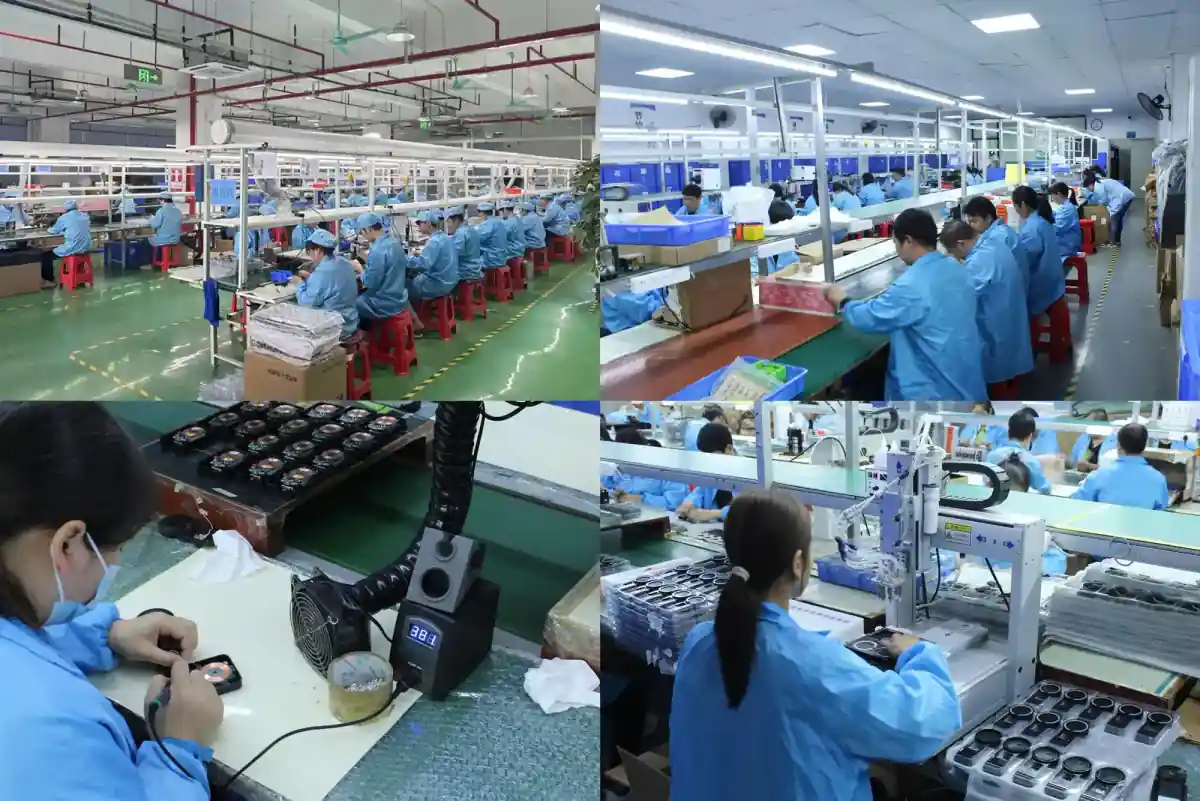
Automated SMT production lines indicate professional manufacturing capability
8. OEM Quality Control Verification: IQC to OQC Audit
Quality control separates professional factories from commodity suppliers. A robust QC system isn't just about catching defective products, it's about preventing defects from occurring in the first place through systematic process control.
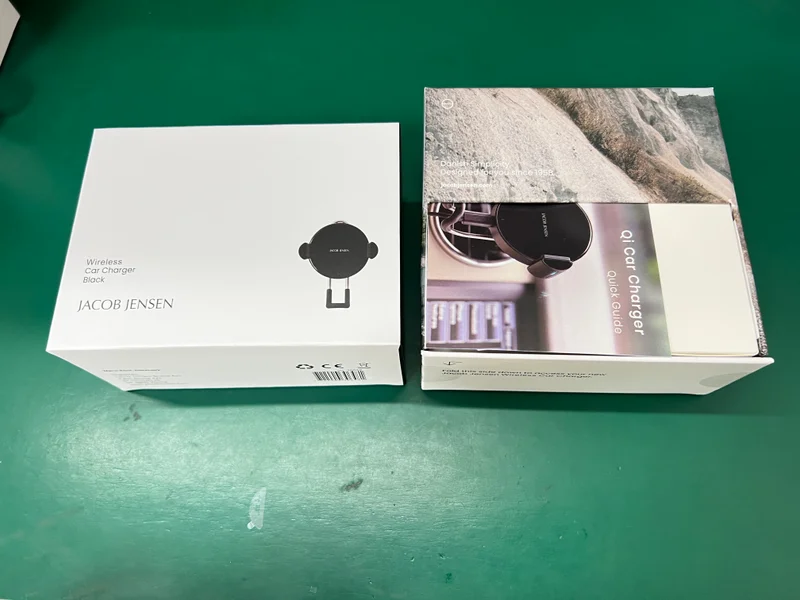
Professional QC inspection ensures consistent product quality across every production batch
9. Supplier Financial Stability Assessment for OEM Buyers
A factory's financial health directly impacts their ability to fulfill long-term orders, invest in quality equipment, and maintain consistent production. Assessing financial stability helps you avoid partners who may go bankrupt mid-order or cut corners to stay afloat.
11. Communication & Professional Assessment
Communication quality often predicts relationship success. Professional factories maintain clear, responsive communication as a standard practice. Use these checkpoints to evaluate their communication and professionalism.
12. How to Evaluate Samples from a Factory?
Samples are your best preview of production quality. Never skip sample evaluation, regardless of how impressive a factory's credentials appear. This phase reveals the truth about their actual manufacturing capability.
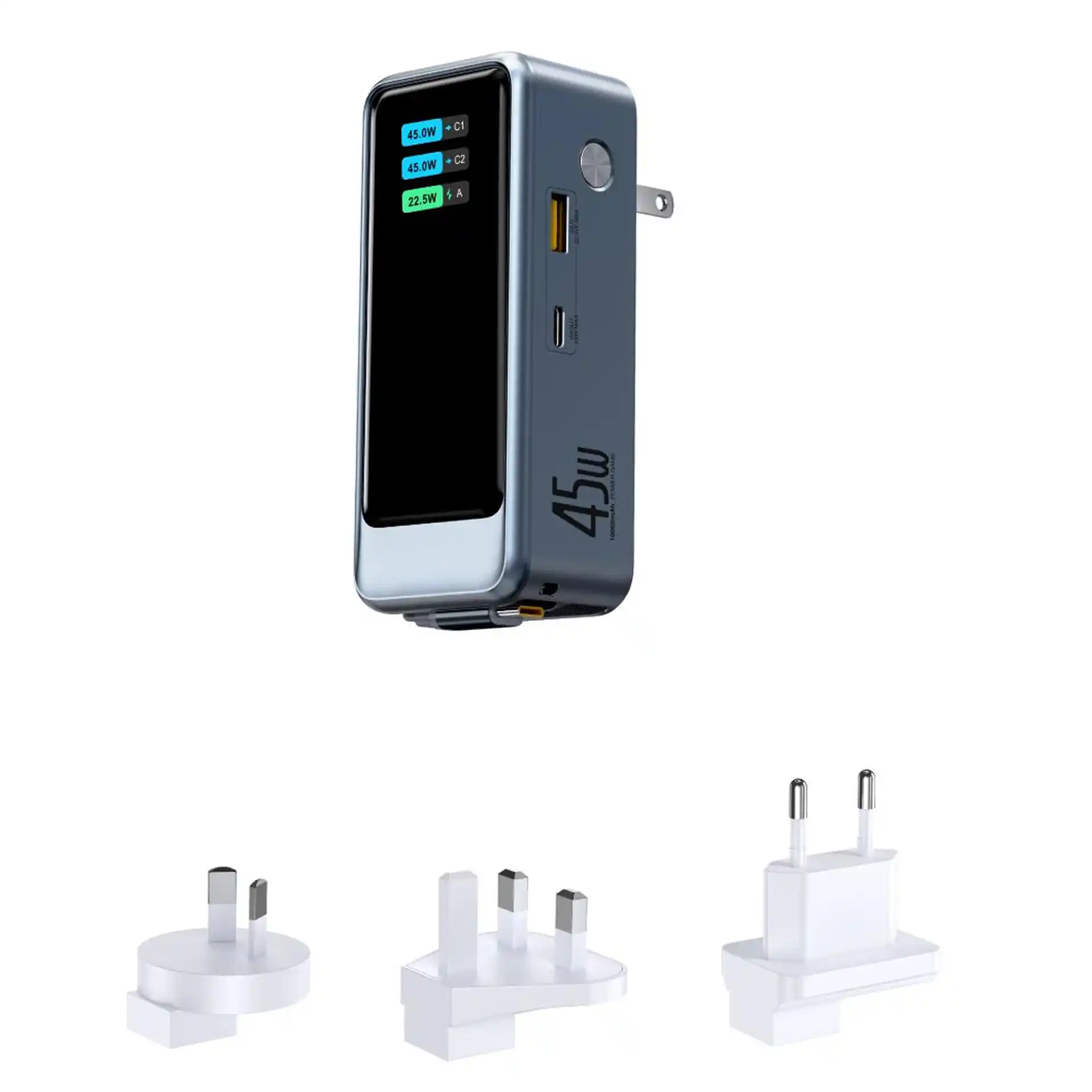
Request samples to verify build quality, charging speed, and certification compliance
13. Red Flags: Warning Signs to Watch
Recognizing warning signs early saves you from costly mistakes. If you encounter multiple red flags, reconsider the supplier regardless of how attractive their pricing or credentials appear.
Refuses to provide any documentation
Legitimate factories are registered and can provide business licenses, certifications, and references. Refusal to share basic documentation is a major warning sign.
Prices too good to be true
If pricing is 30%+ below market rates, something is wrong, usually quality, authenticity, or there's no actual goods to deliver. Get multiple quotes and understand market pricing.
No sample policy or refuses samples
Professional manufacturers stand behind their products with samples. Refusal to provide samples indicates they either can't manufacture to your specs or have something to hide.
Poor communication or delayed responses
Communication problems during the sales phase multiply after payment. If they can't respond promptly now, expect worse after you've committed money.
Can't verify certifications independently
If a factory claims certifications but you can't verify them through official channels, assume they're fake. Always verify independently.
Only accepts Western Union or informal payments
Professional factories accept bank transfers, letter of credit, and payment terms through established financial channels. Western Union is for personal transactions, not B2B manufacturing.
Asks for full payment upfront with no protection
Reputable factories offer payment terms that protect both parties. 100% advance payment removes all your use and risk protection.
Pressure tactics and limited-time offers
Legitimate suppliers don't pressure you into quick decisions. "Order now or lose the price" tactics indicate desperation or fraud, not professional business relationships.
14. OEM Supply Chain & Certification Traceability Audit
For the four core product categories, verify the factory can provide original test reports, not just certificates:
Required Original Reports by Product
| Product | Safety Certifications | Environmental |
|---|---|---|
| Power Bank | UL 2056, UN38.3, IEC 62133 | RoHS, REACH, Battery Directive |
| Wireless Charger | Qi Certified, FCC, CE-LVD | RoHS, WEEE |
| GaN Charger | UL 62368-1, ETL, FCC Part 15 | DOE Level VI, ErP, RoHS |
| Car Charger | UL 2089, FCC Part 15, CE | RoHS, REACH |
Verification Tip
Always request the original test report with laboratory seal, not just a certificate copy. Verify certificate numbers on official databases (UL iQ, TUV portal, WPC Qi database). WOWOHCOOL provides full traceability with verifiable links for every certification.
15. How WOWOHCOOL Passes This Verification Standard
Every checklist item in this article is what we hold ourselves to. Here is how WOWOHCOOL measures against each verification category, so you can see what a passing factory looks like before you evaluate others.
| Verification Category | What to Look For | WOWOHCOOL Status |
|---|---|---|
| Legal Registration | Business license verifiable on gsxt.gov.cn, manufacturing scope, company age 5+ years | ✓ Registered 2013, 10+ years, verifiable on gsxt.gov.cn as Dong Yi Technology Co., Ltd |
| Quality Management | ISO 9001 certified, 4-stage QC (IQC/IPQC/FQC/OQC), traceable records | ✓ ISO 9001 certified (verifiable via SGS), 4-stage QC, 100% 4-hour aging test |
| Production Capacity | 5,000+ sqm facility, SMT lines, 200+ employees, 500K+ monthly output | ✓ 5,000㎡ facility, 4 SMT lines, 200-500 employees, 1M+ monthly capacity |
| Testing Lab | Chroma load testers, thermal chambers, EMC equipment, AOI machines | ✓ Full QC lab: Chroma testers, salt spray, temperature chambers, Hi-Pot, EMC, AOI |
| Certifications | CE, FCC, RoHS, Qi2, UN38.3, verifiable via official databases | ✓ All products CE/FCC/RoHS certified, Qi2 MPP models Qi database-listed, UN38.3 for power banks |
| Factory Access | Welcomes video tours, on-site audits, and third-party inspection | ✓ Open for video calls and on-site visits. Third-party audits by BV/SGS/TUV welcomed |
| Client Track Record | Named references, export history, verifiable client base | ✓ 200+ global brands including Bosch and Jacob Jensen, 10M+ units delivered |
| Payment & Terms | Standard T/T 30/70, L/C accepted, trade assurance available | ✓ T/T 30% deposit / 70% before shipment, L/C for qualified buyers, Alibaba Trade Assurance |
| Specialization | Focused product line, not trading across unrelated categories | ✓ Specialized in charging accessories only: power banks, wireless chargers, GaN chargers, car chargers |
Use this as your benchmark. When you evaluate other suppliers, compare their responses against this table. If a factory cannot provide the same level of transparency across every category, ask why. Legitimate manufacturers have nothing to hide. See our factory credentials or request a live video tour to verify these claims yourself.
WOWOHCOOL FACTORY STAT
As an ISO 9001-certified manufacturer since 2013, WOWOHCOOL implements 4-stage QC (IQC, IPQC, FQC, OQC) with 100% 4-hour burn-in testing on every unit, including TFT display power banks, maintaining a defect rate below 0.5% across 1,000,000+ monthly capacity from our 5,000㎡ Shenzhen facility.
Download Your 2026 Verification Checklist
Use this checklist systematically for every new supplier before committing to an order. We recommend printing this checklist and keeping records of your verification findings for each supplier.
Full 2026 Factory Audit Checklist
Download the complete printable checklist for your next China trip. Compare factories side-by-side using our professional audit framework. When you see what others can't provide, you'll know why WOWOHCOOL stands out.
"Factory verification is not about distrust; it is about building a partnership on a foundation of transparency," says Nina Nico, Supply Chain Expert at WOWOHCOOL. "A legitimate manufacturer welcomes audits, provides documentation freely, and has nothing to hide. If a supplier resists verification, that is your answer."
Learn how to audit wireless charger production lines in our how to choose a wireless charger factory guide. For a broader view on finding reliable partners, read how to choose a reliable China charger supplier.
Frequently Asked Questions
What documents should OEM buyers verify before visiting a factory?
Five documents to verify remotely before booking a flight: (1) Business License, check the registration date (factories under 2 years old have higher failure risk) and scope (look for "manufacturing" not "trading" in the registration category), (2) ISO 9001 certificate, verify on the issuing body's database, not just the PDF, (3) Export License, (4) At least 2 active product certifications (CE/FCC/UL) with verifiable certificate numbers, (5) 3 customer references in your target market. Cross-reference the factory name across all documents, inconsistent names = shell company risk.
How do OEM buyers verify a factory is real and not a trading company?
Request a same-day video tour of the production floor with a dated sign (e.g., today's newspaper). A real factory can do this within 30 minutes. A trading company will make excuses. During the video call, ask to see: SMT lines running (count them, not just one demo unit), aging racks fully loaded with product, QC station screens showing live test data, and the component warehouse. Check the factory address on Google Maps satellite view, if it's an office building in a commercial district or a residential area, it's not a factory. Cross-reference the physical location with the business license address.
What are the 6 red flags that disqualify a factory immediately?
(1) Refuses video tour of production floor within 24 hours. (2) Business license shows "trading company" registration, not "manufacturing." (3) Cannot provide 3 verifiable customer references in your target market. (4) Quotes 50%+ below market average, they are cutting corners you cannot see. (5) Factory address on the business license does not match the actual production location. (6) No English-speaking quality engineer on site, miscommunication on QC specs will cause batch failures. Any factory hitting 3+ of these should be disqualified immediately.
What should OEM buyers photograph during a factory visit?
6 areas to photograph and timestamp: (1) SMT line, confirm they own it, not outsourced. Count the number of lines and check if they are running. (2) Testing station, hipot tester, aging racks, thermal chamber. Check calibration stickers on equipment, expired = not used. (3) Component warehouse, organization level directly correlates with counterfeit risk. Look for misaligned labels and inconsistent date codes. (4) Assembly line, worker count and work density. Empty stations = low volume. (5) Finished goods QC area, look for product stacked for inspection, not just one demo unit. (6) Shipping/packing area, if it is "under renovation" or "not available today," that is the area hiding problems.
How much does third-party factory audit cost for OEM importers in China?
A full-day factory audit by SGS, Bureau Veritas, or TÜV Rheinland costs $350-500 per man-day within Shenzhen/Dongguan/Guangzhou. Specialist firms (QIMA, V-Trust) charge $210-290/day. A standard pre-shipment inspection runs $250-350/day. For a $15,000 order, a $500 audit is 3.3% of order value, it pays for itself by preventing even one batch of defective units. The audit covers: production capacity, quality management system, certification verification, workforce assessment, and social compliance (if BSCI/SEDEX requested).
How do OEM buyers verify a factory's certifications are genuine?
Never accept a PDF certificate at face value. Every genuine certificate has a unique number that can be verified on the issuing body's public database: ISO 9001, check the certification body's online directory (TÜV, SGS, BV all have public portals). CE, request the EU Declaration of Conformity and the EN 62368-1 test report number. FCC, verify the FCC ID on the FCC OET database. UL, verify the UL file number on UL Product iQ. Red flags: certificate has no reference number, database search returns no match, or the factory says "trust me, it is real." Ready to verify your factory? Request our factory audit checklist with 42 verification points.
Supply Chain Expert · Wireless Charging Specialist
Nina Nico is a supply chain management expert with 10+ years experience helping global B2B clients source quality wireless chargers from WOWOHCOOL, a premium charging solution specialist in Shenzhen, China with 47+ Qi-certified models. She holds a degree in International Trade and is a certified supply chain professional (CSCP), with deep expertise in Qi2, GaN, and semi-solid-state battery manufacturing.
Factory Footprint
ISO 9001 Facility
Shenzhen, China
Export Countries
Engineers In-House
Need Help Verifying a Factory?
WOWOHCOOL welcomes factory visits and video calls. We're a verified ISO 9001 factory since 2013, specializing in wireless chargers, power chargers, and car chargers. Let us demonstrate our capabilities directly.
Sources & References
- ISO Certificate Validation Portal, Verify quality management certifications
- Wireless Power Consortium, Qi Certified Product Database
- FCC SDoC Database, Verify US radio frequency compliance
- SA8000 Standard, Social Accountability International
- Chinese Customs Administration, Verify import/export license
- CNAS Database, China National Accreditation Service
Start Your Project
Ready to Source
from the Factory?
Get a custom quote for OEM/ODM charging products. Our engineers respond within 4 hours.
Or call us directly: +86-186-2078-9739
10. Social Compliance Audit
Social compliance is increasingly critical for Western markets. Brands face reputational risk and potential legal liability for supply chain labor practices. A comprehensive social compliance audit protects your brand and ensures ethical production standards.