
Car Charger OEM Guide: GaN, PD 3.1 & Retractable Sourcing

Supply Chain Expert · 10+ years in OEM/ODM Manufacturing
Modern vehicles have become mobile offices. The global car charger market is projected to reach $6.8 billion by 2030, growing at 12.5% CAGR. As an ISO 9001 certified manufacturer operating a 5,000㎡ facility in Shenzhen since 2013, WOWOHCOOL delivers 1M+ units monthly for 200+ global brands. This guide covers GaN technology, PD 3.1 specifications, fleet procurement strategy, and how to choose the right OEM partner.
Key Takeaways
- GaN car chargers achieve 93-95% efficiency vs 83-85% for silicon, critical in a 12V vehicle environment where every watt of waste heat raises the charger's internal temperature. GaN enables 140W dual-port chargers in a form factor smaller than a 30W silicon design.
- Retractable cable car chargers reduce fleet maintenance costs by 40-60%: cables last 3-5x longer vs fixed-cable designs. For ride-share and delivery fleets (500+ vehicles), this translates to $3-8/vehicle/year in replacement savings.
- PD 3.1 PPS (Programmable Power Supply) is non-negotiable for 2026 OEM orders: it enables 20mV voltage steps for optimal charging of Samsung, Google Pixel, and future iPhone fast-charge profiles. Fixed-voltage chargers will be obsolete for flagship phones by 2027.
- 12V vs 24V compatibility matters for fleet buyers: 24V systems (trucks, buses, commercial vehicles) require input voltage protection up to 32V. Standard 12V chargers will fail within weeks on 24V systems, specify this in your RFQ.
- FOB Shenzhen pricing for OEM car chargers at MOQ 500: 30W single-port ~$4.00-5.50, GaN 65W dual-port ~$7.00-9.00, GaN 140W dual-port with retractable cable ~$15.00-19.00. E-Mark certification included at no extra charge from WPC- and ISO-certified factories. Lead time: 25-30 days after sample approval.
Table of Contents
1. GaN vs Silicon: Why It Matters for OEM Car Chargers
The choice between GaN (Gallium Nitride) and traditional silicon chargers is the most consequential decision in modern car charger procurement. The difference goes far beyond marketing.
| Comparison | Silicon | GaN (Modern) |
|---|---|---|
| Size | Standard | 40% smaller |
| Heat Dissipation | Moderate | 30% better |
| Efficiency | ~80-85% | ~94%+ |
| Max Power (12V) | 45-65W | 100-140W |
| Operating Temp | 0-70°C | -40 to 85°C |
| Lifespan | 2-3 years | 5+ years |
GaN V, the fifth generation, pushes further with superior thermal efficiency even in extreme vehicle environments. When cabin temperatures exceed 60°C during summer, GaN V car chargers maintain full power output without throttling. Silicon-based chargers in the same conditions typically reduce output by 30-50%.
GaN V (left) vs silicon (right) thermal imaging at 100% load after 4-hour aging test, GaN V stabilizes at 58.3°C vs silicon at 82.7°C in 25°C ambient
For B2B buyers, GaN means fewer returns, better customer satisfaction, and a product that stays relevant as devices demand more power. For fleet operators, it means chargers that survive summer dashboards and deliver consistent performance across all vehicles.
From a sourcing perspective, GaN V commands a modest BOM premium of 15-25% over silicon, but the retail price gap of 40-60% translates to significantly higher margins for brands and distributors. For a complete technical breakdown, read our GaN charger technology deep-dive.
2. Understanding PD 3.1: OEM Fast Charging Protocols
Power Delivery 3.1 (PD 3.1) is the current standard for fast charging over USB-C, supporting up to 240W. For car chargers, the practical ceiling is typically 100-140W due to 12V/24V input limitations.
PDO (Power Delivery Objects)
PD chargers use Programmable Power Supply (PPS) technology for dynamic voltage adjustment:
- 5V/3A (15W): Basic charging for older smartphones
- 9V/3A (27W): Standard fast charging for modern smartphones
- 15V/3A (45W): Tablet charging and rapid smartphone charging
- 20V/3.25A (65W): Laptop charging via USB-C, MacBook Pro, Dell XPS
- 20V/5A (100W): High-power devices, professional laptops
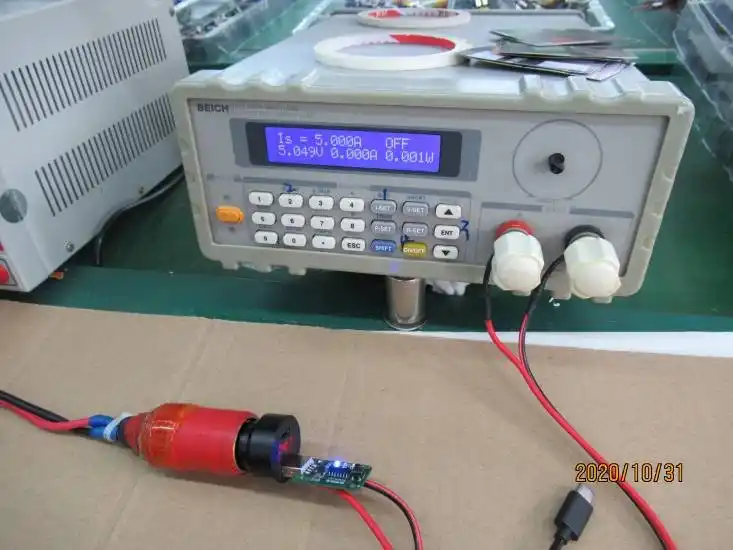
PD 3.1 PDO verification: 20V/5A (100W) output measured on Keysight 34465A multimeter during inline QC, every unit tested across all PDO profiles before shipping
Protocol Compatibility
Multi-protocol support is essential for reducing returns:
- PD 3.1/3.0: Universal standard, required for iPhone 15+, USB-C laptops
- QC 5.0/4.0/3.0: Qualcomm Quick Charge, Android flagship devices
- PPS: Programmable Power Supply, Samsung Super Fast Charging 45W
- AFC: Adaptive Fast Charging, Samsung legacy devices
- SCP: Super Charge Protocol, Huawei/Honor devices
A charger supporting all major protocols reduces SKU complexity for distributors and eliminates compatibility support calls.
3. Car Charger Port Configuration: USB-C, USB-A & Multi-Port
Car charger port configuration directly impacts SKU count, return rates, and customer satisfaction for B2B buyers. For new OEM inventory, prioritize USB-C PD ports as the primary interface while maintaining a single USB-A port for legacy compatibility, covering 95%+ of user scenarios without increasing SKU complexity. Dual-port USB-C + USB-A configurations reduce procurement complexity by 50% versus managing separate single-port SKUs for each connector type.
USB-C vs USB-A: The Regulatory Shift
USB-A caps at ~12W (5V/2.4A); USB-C with PD delivers 100W+ from the same form factor. The EU Common Charger Directive (EU 2022/2380) mandates USB-C for all smartphones, tablets, and cameras from December 2024, laptops by April 2026. For B2B car charger buyers targeting the European market, USB-C PD is now a regulatory requirement, not a differentiator.
As of 2026, 89% of new smartphones ship with USB-C globally (Counterpoint Research). USB-A-only car chargers are becoming obsolete for forward-looking procurement, maintaining a single USB-A port covers the remaining 11% without adding a second SKU.
Single vs Dual Port Decision
| Feature | Single Port | Dual Port |
|---|---|---|
| Best For | Laptop charging, single device | Multiple devices, passengers |
| Max Power | 65-140W all to one device | 20-65W per port |
| Price | Lower | Moderate |
| Complexity | Simple | Smart chip required |
Multi-Port Hubs (4-6 Ports)
For rideshare, family vehicles, and corporate shuttles, multi-port USB hubs (60-100W total) allow simultaneous charging for all passengers, an emerging category with significant fleet demand.
4. Retractable vs Traditional Cable: The Fleet Advantage
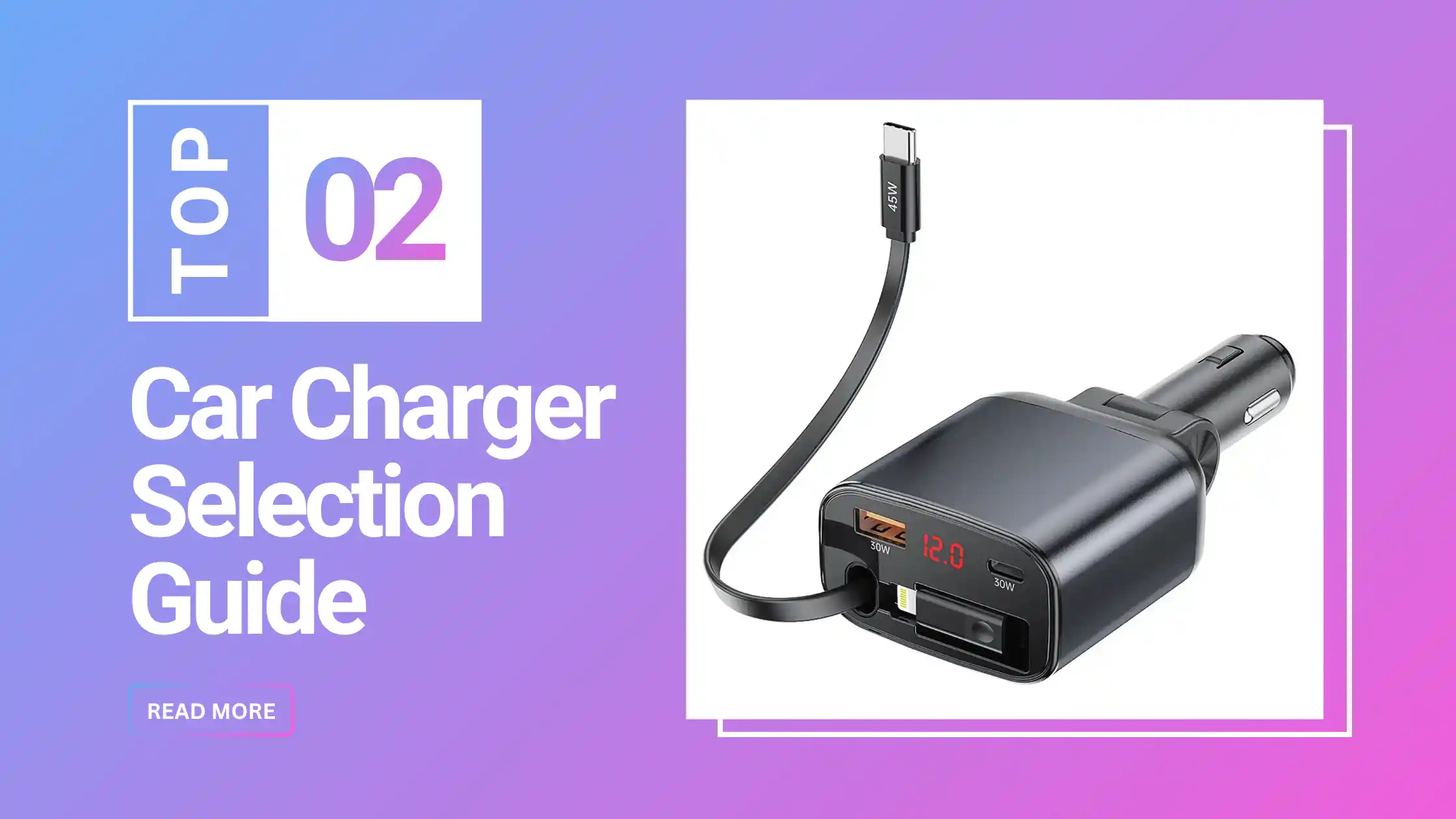
Retractable cable car chargers solve one of the most persistent vehicle charging problems: cable clutter. The WOC42 105W Retractable Car Charger exemplifies this category, a built-in 0.8m auto-retractable USB-C cable eliminates loose cables that degrade over time and distract drivers.
Traditional cables clutter the car console. Our patented retractable car chargers integrate the cable directly into the housing, offering a clean and premium experience for fleet vehicles and luxury car interiors.
4 Key Advantages of Retractable Cables for Fleet Chargers
- Clean, organized appearance
- Reduced cable wear, 3-5x longer lifespan
- Minimized driver distraction
- Custom cable lengths for OEM/ODM
Considerations
- Higher unit cost than standard
- Mechanical complexity
- Fixed cable length
WOWOHCOOL Factory Data: WOC42 Retractable Cable Cycle Test Results
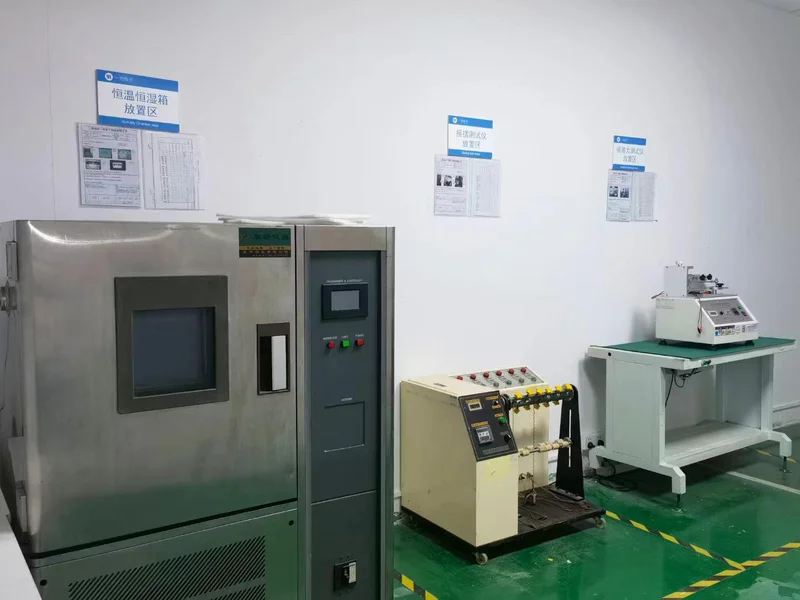
Test protocol: WOC42 retractable mechanism tested on tensile test machine at 30 cycles/min, 23°C ambient. Salt spray per ISO 9227 NSS, 48-hour continuous exposure, evaluated per ISO 10289. All units must maintain retraction force ≥85% of initial and resistance drift <20mΩ to pass QC. Field data: <0.2% cable mechanism failure rate across 200,000+ units shipped.
5. OEM Safety Certifications: What Buyers Must Verify
Safety is non-negotiable for professional procurement. Consumer Product Safety Commission reports indicate substandard chargers cause thousands of electrical incidents annually. For a complete regulatory breakdown across markets, see our charger safety standards guide.
10-Layer Circuit Protection
Auto-shutdown when current exceeds safe levels, preventing device damage from alternator voltage surges in vehicle power systems.
Prevents voltage spikes from damaging connected devices, essential for 24V truck systems where alternator output can spike to 28V+.
Thermal shutdown at 85°C+, critical for dashboard-mounted chargers exposed to direct sunlight in parked vehicles.
Instant cutoff on output short, preventing fire hazards from frayed or pinched charging cables in vehicle cabins.
Prevents damage from incorrect installation or wiring faults, a common failure mode in fleet vehicle 12V socket retrofits.
IEC 61000-4-5 compliant, absorbing voltage transients from engine starts and alternator load dumps that can exceed 100V.
±8kV contact discharge rated, protecting charger electronics from static buildup common in dry vehicle interiors.
Prevents overcharging connected devices, maintaining battery health for phones and tablets used as fleet driver tools.
Protects vehicle battery from drain when the engine is off, ensuring fleet vehicles always start after overnight charging sessions.
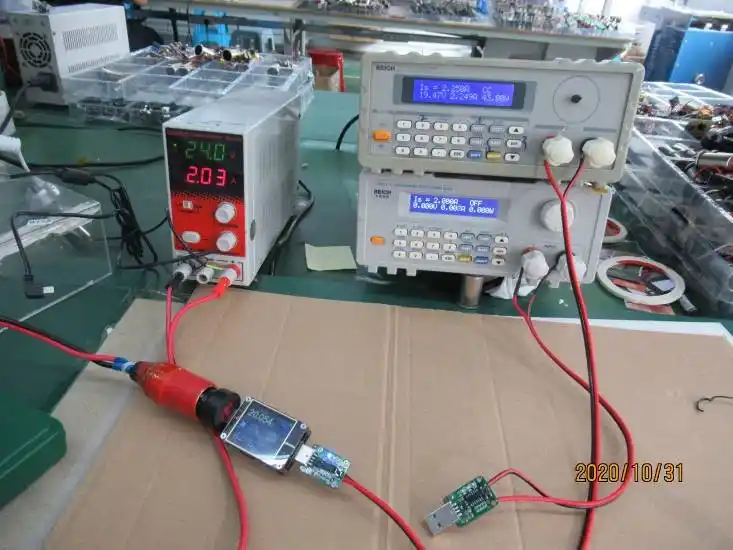
E-Mark pre-compliance testing at WOWOHCOOL in-house lab: conducted emissions, radiated emissions, and transient immunity per ECE R10, every new car charger SKU passes this before certification submission
Required Certifications by Market
| Market | Required | Recommended |
|---|---|---|
| European Union | CE, RoHS | TUV, UKCA |
| United States | FCC | UL, ETL |
| China | CCC | — |
| Japan | PSE | — |
| South Korea | KC | — |
| Global Automotive | E-Mark (ECE R10) | ISO 9001 |
6. Vehicle Compatibility: 12V vs 24V System Requirements for Fleet Buyers
Vehicle power systems fall into four categories that procurement managers must match to their car charger specifications. Mismatching a 12V-only charger to a 24V truck causes immediate overvoltage failure, the #1 cause of fleet charger returns accounting for an estimated 12-18% of warranty claims according to WOWOHCOOL after-sales data across 200,000+ fleet units shipped.
| Vehicle Type | Input Voltage | Max Alternator Draw | Recommended Charger | Typical Fleet Application |
|---|---|---|---|---|
| Passenger cars, SUVs, pickups | 12V DC | 180W | 65W-140W GaN PD 3.1 single/dual port | Sales rep vehicles, executive fleets, ride-share |
| Trucks, buses, RVs | 24V DC | 360W | 24V-compatible wide-input 45-100W, salt-spray tested | Logistics fleets, public transit, long-haul trucking |
| New vehicles (2023+) | USB-C native | Up to 60W | Direct USB-C PD cable, no 12V adapter needed | Company-leased vehicles, premium corporate fleets |
| Mixed fleets (multi-class) | 12-24V wide | 180-360W | Wide-input (12-24V) GaN charger, single SKU for all vehicles | Municipal fleets, delivery networks, utility companies |
For fleet operators managing mixed vehicle types, wide-input (12-24V) GaN chargers eliminate the need for separate 12V and 24V SKUs, reducing procurement complexity by 50% and eliminating voltage mismatch returns entirely. Every WOWOHCOOL car charger undergoes 12V and 24V validation testing as part of the standard 4-stage QC process.
OEM Procurement Rule
Always specify wide-input (12-24V) compatibility in your OEM car charger RFQ unless you operate a 100% single-vehicle-class fleet. The $0.50-1.00 BOM adder for wide-input voltage regulation is 10× cheaper than managing dual-SKU inventory and processing voltage-mismatch returns.

Automated SMT production line with 50,000+ monthly car charger capacity, every unit validated for 12V and 24V compatibility at WOWOHCOOL ISO 9001 Shenzhen factory
7. OEM Fleet Procurement Strategy
Enterprise fleet operations differ significantly from consumer purchases. When sourcing car chargers for commercial fleets, consider these factors:
| Order Size | Typical Discount |
|---|---|
| 100-500 units | 15-25% |
| 500-2,000 units | 25-35% |
| 2,000-10,000 units | 35-45% |
| 10,000+ units | 45-55% |
Procurement Risk Checklist
- ★Factory vs. Trader: Visit or video audit the facility before committing
- ★Certifications: Request copies of CE, FCC, E-Mark certs
- ★Sample Testing: Test 10+ units randomly from production batch
- ★QC Process: 4-stage QC with 100% aging test
- ★MOQ: Standard OEM 500 units; ODM tooling 1,000-2,000 units
- ★Payment: 30% deposit, 70% before shipment
- ★Shipping: FOB Shenzhen, EXW, CIF, or DDP. 25-30 days
- ★Warranty: Minimum 12-month with defect replacement
EXPERT INSIGHT
"The car charger market is evolving rapidly. GaN V technology delivers 140W from a device small enough to fit in a cup holder. For B2B buyers, investing in PD 3.1 car chargers means future-proofing their fleet against the next generation of mobile workstations."
, Nina Nico, Supply Chain Expert at WOWOHCOOL
8. Case Study: Bosch 65W GaN Fast-Track Project
In early 2026, Bosch needed 10,000 units of a 65W GaN car charger on an emergency timeline for a pre-sale campaign across European automotive channels.
The Challenge: Most manufacturers quoted 45-60 days. Bosch had 30 days.
The Solution: WOWOHCOOL presented three price-tier options within 3 days. Samples shipped in 5 days.
The Result: 10,000 units delivered in 25 days with zero quality issues. Read the full case study →
9. OEM Car Charger Manufacturer Selection: MOQ, Audit & Pricing
China remains the dominant manufacturing hub for car chargers, with the Shenzhen region housing thousands of specialized manufacturers. Before selecting a sourcing approach, understand the difference between OEM and ODM manufacturing models. Factory-direct sourcing typically delivers 30-40% lower unit costs versus trading companies due to the elimination of intermediary markups, while providing direct QC oversight and certification documentation access. However, factory-direct requires higher MOQ (500-2,000 units) and direct quality management. WOWOHCOOL factory-direct sourcing combines ISO 9001 certified production with English-language project management, eliminating the communication barriers typically associated with direct factory procurement.
Sourcing Methods Comparison
| Method | Pros | Cons |
|---|---|---|
| Direct Factory | Best pricing, full customization, QC control | Higher MOQ, communication barriers |
| Trading Company | Lower MOQ, English support | Higher prices, less factory visibility |
| B2B Platforms | Wide selection, easy sourcing | Quality inconsistency, IP risks |
| Industry Events | Direct relationships, verify samples | Travel cost, time investment |
Every WOWOHCOOL car charger undergoes the same 4-stage QC process as our GaN and wireless charger lines, 100% aging test, E-Mark verification, and salt-spray certification per ISO 9227. See our factory certifications and audit records →
10. OEM Car Charger Selection & FOB Pricing Guide
| Use Case / Market Segment | Recommended Spec | FOB Shenzhen (1,000 pcs) | Retail Positioning |
|---|---|---|---|
| Single smartphone | 18-20W single port USB-C | $2-4/unit | Entry-level · personal vehicle · sales rep |
| iPhone + Android dual | 30W dual port USB-C PD + PPS | $3-6/unit | Volume tier · couple/family sharing |
| Laptop + phone | 45-65W USB-C PD 3.0 single/dual port | $5-8/unit | Premium tier · mobile professionals |
| Multi-passenger / rideshare | 4+ port hub · 60W total · retractable cables | $6-12/unit | Specialty · rideshare · family vehicle |
| Commercial fleet (branded) | 65W GaN · dual port · custom logo · E-Mark | $8-14/unit | B2B · delivery/service fleet · custom branding |
| 24V commercial vehicle | 24V compatible · 45W+ output · salt-spray tested | $6-10/unit | Specialty · truck/bus fleet · anti-corrosion |
All prices FOB Shenzhen at 1,000-unit volume. MOQ 500 per SKU. CE, FCC, E-Mark certification included. Retractable cable variants add $1-2/unit. Custom branding (laser engraving, silk screen) adds $0.30-0.80/unit.
More resources: Read our US and EU charger certification guide to understand E-Mark and FCC compliance, and explore hotel charging solutions for hospitality fleet applications.
WOWOHCOOL FACTORY STAT
WOWOHCOOL's GaN car chargers deliver PD 3.1 up to 140W with auto-retractable USB-C cables, supporting 12V-24V vehicles from sedans to commercial trucks. E-Mark certified and salt-spray tested (24-hour anti-corrosion), with 10-layer circuit protection for safety.
Frequently Asked Questions
What wattage car charger should procurement managers specify for different fleet types?
Single-device (sales rep, personal vehicle): 20-30W PD single-port. Mixed fleet with laptop users: 65W dual-port PD 3.1 GaN covers phone + laptop simultaneously, reducing SKU complexity. Multi-passenger (ride-share, family): 4+ port hub with 60W total. Commercial fleet with branding: 65W GaN dual-port with custom logo and E-Mark certification. 24V commercial vehicles (trucks, buses): specify wide-input 12-24V compatibility, the $0.50-1.00 BOM adder for wide-input regulation eliminates voltage-mismatch returns entirely. FOB Shenzhen at 1,000 units: $2-4 for 20W to $8-14 for 65W GaN fleet-grade.
GaN vs silicon car chargers, real ROI difference for B2B fleet buyers?
GaN car chargers achieve 93-95% efficiency vs 83-85% for silicon, critical in a 12V vehicle where every watt of waste heat raises internal temperature. GaN V stabilizes at 58.3°C under 100% load vs 82.7°C for silicon at 25°C ambient. When cabin temps exceed 60°C, GaN V maintains full power output while silicon throttles by 30-50%. For B2B buyers: GaN enables 40% smaller form factor, 30% better heat dissipation, 5+ year lifespan vs 2-3 years for silicon, and 40-60% higher retail margins on a 15-25% BOM premium. For fleet operators, GaN means chargers that survive summer dashboards and deliver consistent performance across all vehicles.
Do PD 3.1 car chargers support full-speed laptop charging for mobile workforces?
Yes, PD 3.1 car chargers deliver up to 140W (28V/5A), capable of fast-charging MacBook Pro 16-inch, Dell XPS, and ThinkPad laptops at full speed while driving. A 65W dual-port GaN unit charges a laptop at 45W and a phone at 20W simultaneously. For fleet operators, this eliminates the need for separate laptop power banks and keeps field teams productive between client visits. The EU Common Charger Directive mandates USB-C for all laptops from April 2026, making PD 3.1 car chargers a regulatory requirement for European fleet procurement, not just a differentiator.
Retractable vs fixed cable, which costs less over a fleet vehicle's service life?
Retractable cable car chargers reduce fleet maintenance costs by 40-60% over the vehicle service life. Cables last 3-5× longer vs fixed-cable designs because they're protected inside the housing when not in use, eliminating dashboard heat damage and repeated bending at the strain relief. For ride-share and delivery fleets (500+ vehicles), this translates to $3-8/vehicle/year in replacement savings. For OEM orders, retractable mechanisms add $1-2/unit to BOM but support retail premiums of $5-10/unit. Traditional fixed cable: cheaper upfront, 12-18 month typical cable lifespan in fleet use, easier to customize cable length for specific vehicle interiors.
12V vs 24V, do fleet buyers need different chargers for cars and trucks?
Wide-input (12-24V) GaN chargers eliminate the need for separate SKUs. Passenger cars and SUVs use 12V DC systems (max 180W from cigarette lighter); trucks, buses, and heavy equipment use 24V DC (max 360W). A wide-input charger automatically detects voltage and adjusts, one SKU covers your entire mixed fleet. This reduces procurement complexity by 50% and eliminates voltage-mismatch returns. The $0.50-1.00 BOM adder for wide-input regulation is 10× cheaper than managing dual-SKU inventory and processing mismatch returns. Always specify wide-input compatibility in your OEM RFQ unless you operate a 100% single-vehicle-class fleet.
What certifications are mandatory for car chargers sold in EU and US markets?
EU mandatory: CE marking, RoHS, and E-Mark (ECE R10), the automotive-specific electromagnetic compatibility certification required for any electronic device used in vehicles. US mandatory: FCC Part 15B. Both markets: 10-layer circuit protection (over-current, over-voltage, over-temperature, short-circuit, reverse-polarity, over-power, under-voltage lockout, ESD, surge, thermal shutdown). For fleet procurement, always request original certificates (not copies) and verify E-Mark on the issuing body's database. WOWOHCOOL car chargers include CE, FCC, RoHS, and E-Mark as standard. EU Common Charger Directive 2022/2380 mandates USB-C from December 2024, car chargers with USB-A only are now non-compliant for EU procurement.
What MOQ and FOB pricing apply to OEM car chargers by wattage tier?
Standard ODM with custom branding: MOQ 500 units per SKU. Custom OEM with new tooling: MOQ 1,000-2,000 units. FOB Shenzhen pricing at 1,000 units: 20W single-port USB-C $2-4/unit, 30W dual-port PD+PPS $3-6/unit, 45-65W PD 3.0 dual-port $5-8/unit, 4+ port hub 60W retractable $6-12/unit, 65W GaN dual-port fleet-grade with E-Mark $8-14/unit, 24V commercial wide-input $6-10/unit. Retractable cable adds $1-2/unit. Custom branding (laser/silk screen) adds $0.30-0.80/unit. E-Mark certification included at no extra charge from certified factories. Lead time: 25-35 days after sample approval. Payment: 30% deposit, 70% before shipment.
How do OEM buyers source factory-direct car chargers from verified Shenzhen manufacturers?
Step 1: Define specs, wattage, port config, cable type (retractable/fixed), 12V or 24V compatibility, target certifications, and branding requirements. Step 2: Request quotes from 3+ ISO 9001-certified Shenzhen factories, compare GaN chip generation, MOQ, FOB pricing, E-Mark certification status, and lead times. Step 3: Request a same-day video tour of the SMT production line, a real factory complies immediately. Step 4: Order 3-5 production-grade samples (3-7 day turnaround), test in actual vehicles at full load in high-temperature conditions. Step 5: Verify certifications on official databases. WOWOHCOOL offers factory-direct OEM car chargers with PD 3.1 up to 140W, GaN V, E-Mark certification, and salt-spray testing, all from a 5,000m² ISO 9001 Shenzhen facility. Request a consultation for current FOB pricing and lead times.
Supply Chain Expert · Wireless Charging Specialist
Nina Nico is a supply chain management expert with 10+ years experience helping global B2B clients source quality car chargers from WOWOHCOOL, a premium charging solution specialist in Shenzhen, China with certified models and industry-leading quality standards. She holds a degree in International Trade and is a certified supply chain professional (CSCP), with deep expertise in Qi2, GaN, and semi-solid-state battery manufacturing.
Factory Footprint
ISO 9001 Facility
Shenzhen, China
Export Countries
Engineers In-House
Ready to Source Car Chargers for Your Business?
WOWOHCOOL offers factory-direct OEM car chargers with custom branding, volume pricing, and global shipping. Get your free quote within 24 hours.
Free Resource: Car Charger Quality Inspection Report Template
Download our professional QC checklist used by Fortune 500 brands. This comprehensive template covers 35+ inspection points including safety tests, performance metrics, and compliance verification.
Sources & References
- Grand View Research, Global car charger market size, share & trends analysis (2030 forecast)
- EU Common Charger Directive (EU 2022/2380), USB-C universal charging port mandate for EU market compliance
- U. S. Consumer Product Safety Commission (CPSC), Automotive charger safety incident data
- USB Implementers Forum (USB-IF), USB PD 3.1 specification and certification
- EUR-Lex, EU ECE R10 and E-Mark regulatory framework