
2026 Market Trends: B2B OEM Sourcing & Technology Forecast

Market Manager · 10+ years in Charger Technology & Market Analysis
The charging accessory industry is undergoing its most significant transformation since USB-C standardization. Three technology shifts, GaN V power semiconductors capturing 35% market share, Qi2.2 25W magnetic wireless reaching 637 certified products, and semi-solid-state batteries achieving 2,000-cycle lifespans, are reshaping the competitive landscape for OEM/ODM buyers worldwide. This is what the data says, and what it means for your next product line.
For B2B buyers planning 2026-2027 SKUs, understanding the trajectory of each technology, not just the headlines, is the difference between launching a product that leads the market and one that arrives already outdated.
Key Takeaways
- Global charger market: $38.2B in 2026, projected $52.1B by 2030 (CAGR 8.1%). GaN chargers now represent 28% of new USB-C charger shipments, up from 18% in 2024. By 2028, GaN is projected to overtake silicon, OEM brands not transitioning now face a cost disadvantage within 24 months.
- Semi-solid-state power banks: 3.2M units shipped in H1 2026, 4x YoY growth. Average selling price dropped 22% YoY as production scaled. Early-mover OEM brands capture 35-45% retail margins vs 15-20% for standard Li-Po power banks, the widest margin gap in the charging accessories category.
- Qi2 adoption surged: 637 certified products as of February 2026 with 69.62% at the 25W tier, driven by iPhone 15W Qi2 support. Qi2-certified wireless chargers command a 25-40% retail premium over non-certified equivalents, the certification cost ($8K-15K) pays back within the first 2,000-3,000 units sold.
- EU USB-C mandate is reshaping charger bundling worldwide. India, Brazil, and California have passed or proposed similar laws. Standalone charger sales grew 12% YoY as manufacturers unbundle chargers, creating a structural OEM opportunity for aftermarket charger brands targeting the $15-40 retail sweet spot.
Table of Contents
1. 2026 OEM Market at a Glance
The charging accessories industry enters 2026 with strong growth across all major segments. The global mobile phone power accessories market, encompassing power banks, wireless chargers, battery cases, and portable chargers, is valued at approximately $42.4 billion, growing at 6.8% year-over-year (The Business Research Company, Jan 2026). Within this, three sub-segments are growing significantly faster than the average.
| Segment | 2024 | 2026 | 2028 (Proj.) | CAGR |
|---|---|---|---|---|
| GaN Charger Market | ~$0.5B | ~$1.2B | ~$2.1B | 25.7% |
| GaN Charger Market Share | 15% | ~35% | ~55% | , |
| Qi2 Smartphone Adoption | ~20% flagships | ~60%+ flagships | ~85% flagships | , |
| Qi2.2 Certified Products | N/A | 637 (Feb 2026) | 1,500+ | , |
| Semi-Solid-State Batteries | Pre-production | Early mass prod. | Mainstream | , |
| Multi-Port GaN (2C+1A) | Niche | Mainstream baseline | Standard | , |
| Wireless Charging Power Bank | ~$4.7B | ~$6.6B | ~$9.3B | 18.9% |
Sources: Persistence Market Research (Apr 2026), Counterpoint Research (2025), WPC (Feb 2026), TBRC (Jan 2026), LP Information (Apr 2026). Wireless charging power banks are the fastest-growing sub-segment.
REGIONAL BREAKDOWN: WHERE GROWTH IS HAPPENING
Key regional dynamics for B2B sourcing decisions in 2026:
| Region | Share | Growth | B2B Opportunity |
|---|---|---|---|
| North America | ~25% | 10-15% | Premium pricing; 3.8× wireless penetration; FCC/UL required |
| Europe | ~20% | 6-8% | Sustainability-driven; 26% chargers carry efficiency labels |
| SE Asia | ~5% | 10-12% | Fastest import growth; 80%+ smartphone penetration |
Sources: Mordor Intelligence, Fortune Business Insights.
2. GaN V: OEM Market Share, FOB Cost Curves & Multi-Port
Gallium Nitride power semiconductors have moved decisively into the mainstream. In 2026, GaN-based chargers hold approximately 35% of the global fast charger market, up from 15% in 2024. The GaN charger segment is valued at $1.2 billion in 2026, growing at a 25.7% CAGR toward a projected $6.0 billion by 2033 (Persistence Market Research, Apr 2026). Innoscience, the world's largest GaN power device maker, has shipped over 1 billion GaN devices, a milestone that signals the technology's manufacturing maturity.
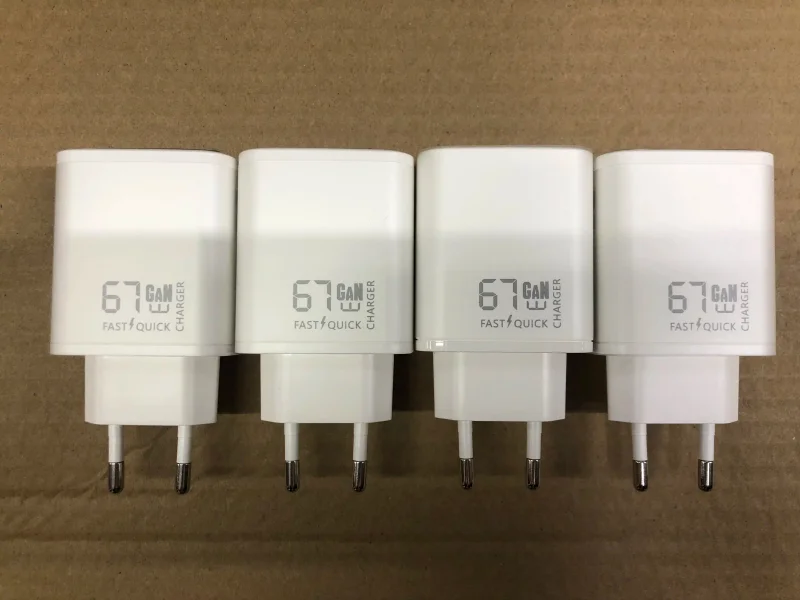
GaN V charger (100W, 2C1A): 40% smaller than silicon equivalent, 94%+ efficiency, 30% better heat dissipation, the baseline for all new OEM designs above 45W in 2026
GaN V Performance Advantage
- , 40% smaller than equivalent silicon chargers at the same power rating
- , 30% better heat dissipation enabling higher power density, OPPO's 100W GaN achieves 1.59 W/cm³
- , Up to 240W via PD 3.1 EPR, enough for high-performance laptops and monitors
- , 3× higher switching frequency reduces transformer size, enabling thinner travel chargers
- , BOM cost gap vs. silicon under 20%, GaN V yields have matured, closing the cost premium
Multi-Port Is Now Baseline
- , 2C1A / 3C1A configurations account for ~44% of GaN charger revenue
- , 100W-140W total output is the sweet spot for desktop and travel chargers
- , "Software-defined charging" emerges: OTA firmware updates, custom charging profiles, app-controlled power allocation
- , Real-time power displays on premium models (Anker Prime, CUKTECH 10 Ultra) are now a consumer expectation
- , Universal protocol support (PD 3.1 + PPS + UFCS + private protocols like Xiaomi 120W) is now table stakes for third-party chargers
OEM IMPLICATION
New charger designs at 45W and above should default to GaN V. Products still launching with silicon-based designs at these power levels risk appearing outdated within their product lifecycle. More critically, the USB PD 3.2 certification deadline means any charger design in progress should target the new AVS and FRS requirements now, retrofitting later adds 8-12 weeks to certification timelines. Browse WOWOHCOOL's GaN V charger lineup →
Asia-Pacific dominates with ~40% of the GaN charger market, with China's growth at 27.4% CAGR driven by domestic brands bundling GaN as standard. Europe is the fastest-growing region at ~30% CAGR, powered by the EU Common Charger Directive (USB-C mandate). For OEM buyers, the concentration of GaN manufacturing in Shenzhen's Greater Bay Area means full supply chain access from epitaxial wafer to finished assembly. For a deeper technical comparison, see: GaN Chargers Guide.
3. Qi2.2: 637 OEM Certified & Counting
The Wireless Power Consortium's Qi2 standard reached a critical milestone in early 2026: 637 certified products as of February 2026, with peak monthly additions of 181 in January alone. 69.62% of new certifications are at the 25W Qi2.2 tier, confirming that the higher-power standard is replacing the original 15W Qi2 as the default (WPC, 2026).
Smartphone OEM Divergence
- , Apple: iPhone 16-17 series all support Qi2.2 at 25W
- , Google: Pixel 10 series ships with built-in "PixelSnap" magnetic array, the first mainstream Android line with native magnetic alignment
- , Samsung: Galaxy S26 notably skipped built-in magnets, opting for "Qi2-Ready" cases due to S Pen interference and space constraints
- , Chinese OEMs: Xiaomi, OnePlus, Oppo, Honor committed to Qi2 across 2026 flagship lineups
Qi2.2 Hardware Requirements
- , Not a firmware update, 25W requires new coil modules with tighter coupling tolerances
- , Thermal management ICs must handle 67% more heat than 15W circuits
- , New chipsets from NXP and ST support the extended power profile negotiation protocol
- , ESR demonstrated a Qi2.2 3-in-1 station at CES 2026; Belkin showed a car mount sustaining 25W at 45°C ambient
ACCESSORY ECOSYSTEM BREAKDOWN
Qi2.2 certified products by category: multi-function chargers 35.95%, desktop chargers 18.84%, power banks 17.43%, car chargers 14.91%, smartphones only 2.36% (15 models). The ecosystem is accessory-led, meaning the market opportunity for OEM brands is in chargers and Qi2 wireless power banks, not just phone cases.
Samsung's Qi2-Ready approach creates a specific OEM opportunity: magnetic cases with embedded Qi2 receiver coils for the S26 installed base. For brands targeting both iOS and Android with a single SKU, Qi2 remains the platform-agnostic choice, 15W magnetic charging without MFi licensing costs that add 20-30% to MagSafe accessory BOMs. See our comparison: Qi2 vs MagSafe Guide. Explore Qi2 wireless charger OEM options →
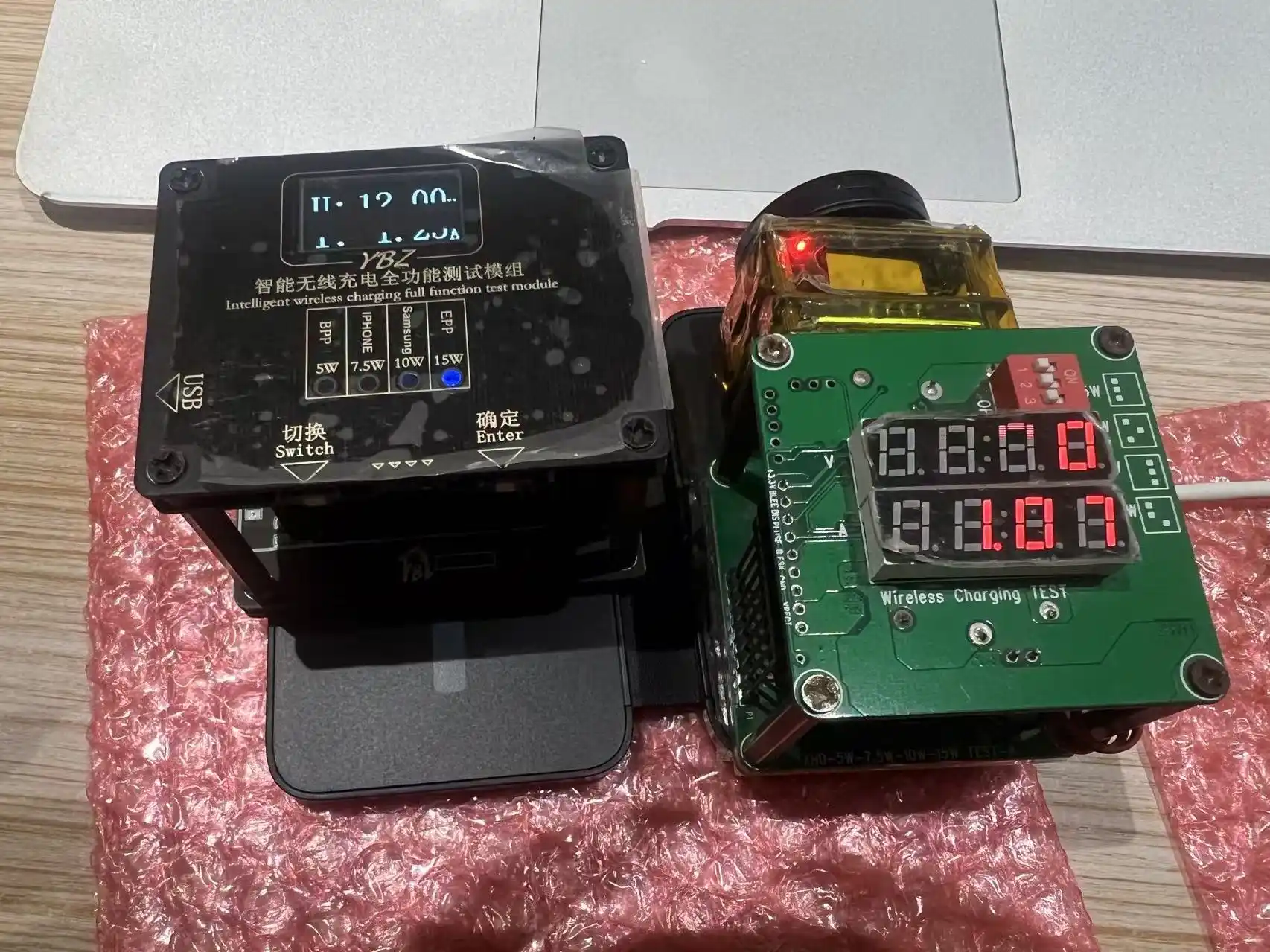
Qi2.2 module production testing: 637 WPC-certified products as of Feb 2026, 69.6% at 25W tier — OEM brands must specify Qi2.2 coil modules with tighter coupling tolerances for 25W certification
4. Semi-Solid-State Batteries: The Commercialization Milestone
Semi-solid-state battery (SSB) technology, cells using a gel or polymer-infused electrolyte that eliminates flammable liquid while retaining high ionic conductivity, crossed from prototype to commercial production in 2026. Three manufacturers lead the charge:
| Manufacturer | Product | Key Spec | Status |
|---|---|---|---|
| BMX | SolidSafe Air, 5,000 mAh, Qi2.2 wireless, 140W USB-C output | 6.8mm thick | Q2 2026 |
| ELECOM | DE-C85-5000, 5,000 mAh, 22.5W output, Health Monitor system | 2,000 cycles | May 2026 |
| Ambrane | Multi-capacity SSB power banks, engineered for high-temp/humidity | Target 1-2M units/yr | Mass prod. |
| Specification | Li-Polymer | Semi-Solid-State |
|---|---|---|
| Energy Density | 200-250 Wh/kg | 260-350 Wh/kg (+30%) |
| Thickness (10,000mAh) | ~14-16mm | ~8-10mm (-50%) |
| Cycle Life | 300-500 cycles | 800-2,000 cycles |
| Thermal Runaway Risk | Present | Near zero |
| Operating Temperature | 0°C to 45°C | -20°C to 60°C |
ELECOM's 2,000-cycle rating is the number to watch. At 4× the lifespan of traditional Li-polymer cells, it changes the value proposition for premium power banks, from a consumable accessory to a durable good. For OEM buyers, the strategic question is not whether to adopt SSB, but when in the cost curve to enter. Early adopters pay a 30-40% cell premium but gain 12-18 months of market exclusivity in the premium power bank segment. WOWOHCOOL featured semi-solid-state power bank technology at CES 2026. See: Semi-Solid-State Power Bank OEM Guide. Explore semi-solid-state power banks →
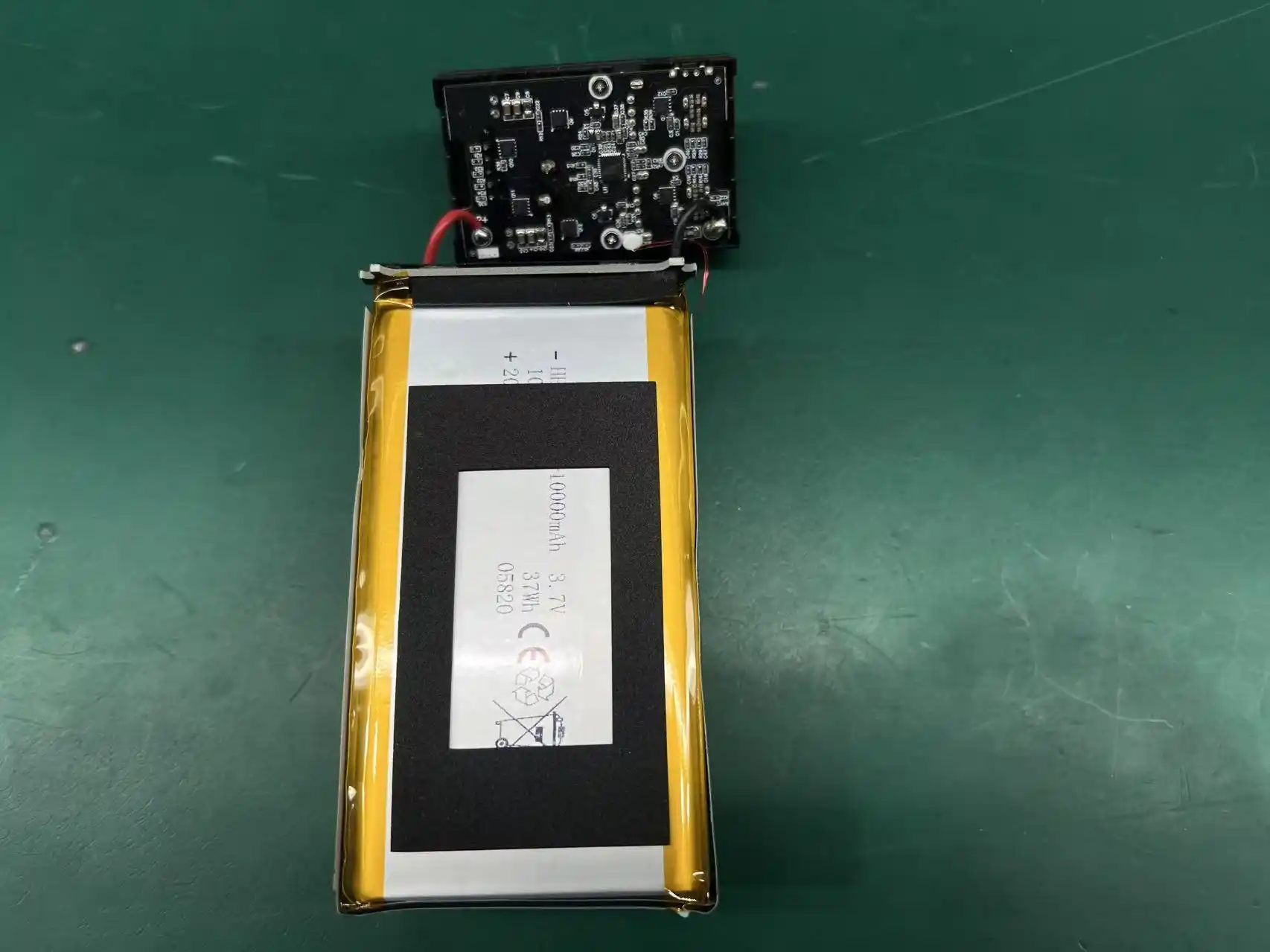
Semi-solid-state battery cells: gel electrolyte eliminates flammable liquid, 2,000-cycle rating at 4× Li-polymer lifespan — the commercialization milestone OEM buyers should watch for 2027 SKUs
5. USB PD 3.2: What Actually Changed
Correction: Previous industry speculation about PD 3.2 supporting 280W was inaccurate. The published USB PD 3.2 (R3.2 V1.1), adopted as IEC 62680-1-2:2026 in February 2026, maintains the 240W EPR ceiling. What changed is more important than a headline wattage number, PD 3.2 restructures how chargers negotiate and distribute power.
What PD 3.2 Adds
- , AVS (Adjustable Voltage Supply): mandatory for all >27W products, 100mV step granularity from 9V-15V (≤45W) or 9V-20V (>45W), improving thermal efficiency by an estimated 8-12%
- , FRS (Fast Role Swap): now mandatory testing, ensures uninterrupted power when unplugging/replugging in multi-port configurations
- , Shared Capacity Protocol: standardized power reallocation across ≥2 ports, eliminating the "unplug and re-plug" dance to get full speed
Certification Deadlines
- , PD 3.1 certification window closed March 2026, all new charger certifications must now use PD 3.2 test procedures
- , Chip vendors: Infineon, Cypress, Weltrend have PD 3.2-compliant silicon available; Navitas GaN controllers are PD 3.2-ready
- , End-product grace period: 24 months from spec publication, but early compliance is a competitive differentiator
PLANNING NOTE
Charger designs that completed PD 3.1 certification before March 2026 remain valid, but any new design or redesign must meet PD 3.2 requirements. If your OEM partner is still quoting PD 3.1 for a new project, ask whether their test house has transitioned to PD 3.2 procedures. A "yes" with no AVS test plan is a red flag. USB-C PD Fast Charging Guide →
6. China Manufacturing: CCC QR Codes & Regulatory Reset
China's CNCA Announcement No. 27 of 2025 mandates QR-coded CCC marks for all power banks, triggering the largest regulatory consolidation of Shenzhen's charging accessory manufacturing sector in a decade. Two major changes reshape the landscape for OEM/ODM buyers sourcing from the Greater Bay Area.
CCC Traceability QR Codes
China's CNCA Announcement No. 27 of 2025 requires all power banks and portable power sources to carry a QR code alongside the CCC mark. Scanning reveals the certificate number, manufacturer name, model, and certificate validity status.
March 1, 2026: All newly certified power banks must carry the QR code before sale
March 1, 2027: All existing certified products must comply, no exceptions
Supply Chain Impact
Industry analysts estimate these regulations will eliminate approximately 70% of current small-scale production capacity, factories unable to absorb compliance infrastructure costs. Manufacturing costs are projected to rise 20-30% as compliant factories upgrade testing labs and traceability systems. Counterintuitively, this benefits professional OEMs: industry margins are expected to shift from 5-8% toward 12-15% as the low-cost, low-compliance segment exits.
For OEM/ODM buyers, the CCC QR code mandate is a factory vetting shortcut: if your supplier cannot show you their QR code implementation process and CCC certificate database registration, they are not compliant. This regulation, combined with the EU Cyber Resilience Act (effective September 2026, requiring ongoing firmware support for connected charging products) and sustained US Section 301 tariffs at 25% on Chinese electronics, creates a more complex compliance environment, but one that rewards buyers who partner with established, certified manufacturers rather than chasing the lowest quote. Charger Safety Standards Guide →
7. B2B Decision Framework for 2027 SKUs
The five trends above converge into a simple decision framework for brand owners planning their next product cycle.
| Technology | Status | Action for 2027 SKUs | Risk of Waiting |
|---|---|---|---|
| GaN V | ADOPT NOW | Default choice for ≥45W. Multi-port 2C1A minimum. | Silicon designs look outdated by mid-2027 |
| Qi2.2 | ADOPT NOW | Certify accessories at 25W tier. 637 products already live. | 15W-only products become "last-gen" by Q4 2026 |
| Semi-Solid-State | EVALUATE | Sample now, plan premium SKU for H2 2027 | Pay 30-40% cell premium for exclusivity; or wait for cost decline |
| PD 3.2 | MANDATORY | All new charger designs must certify under PD 3.2 | Non-compliance = no USB-IF cert, no EU market access |
| CCC QR Code | MANDATORY | Verify factory compliance now. Deadline March 2027. | Non-compliant inventory blocked at China customs |
BOTTOM LINE
The window for early adoption is open but narrowing. The key strategic decision is not whether to adopt these technologies, but sequencing: GaN V and PD 3.2 are immediate requirements for any new charger design. Qi2.2 certification should be secured before Q4 2026 to capture holiday-season demand. Semi-solid-state batteries are the one technology where waiting 12 months is a defensible strategy, if you are willing to cede the premium tier to early movers. Contact our team → to discuss how these trends apply to your specific product roadmap.
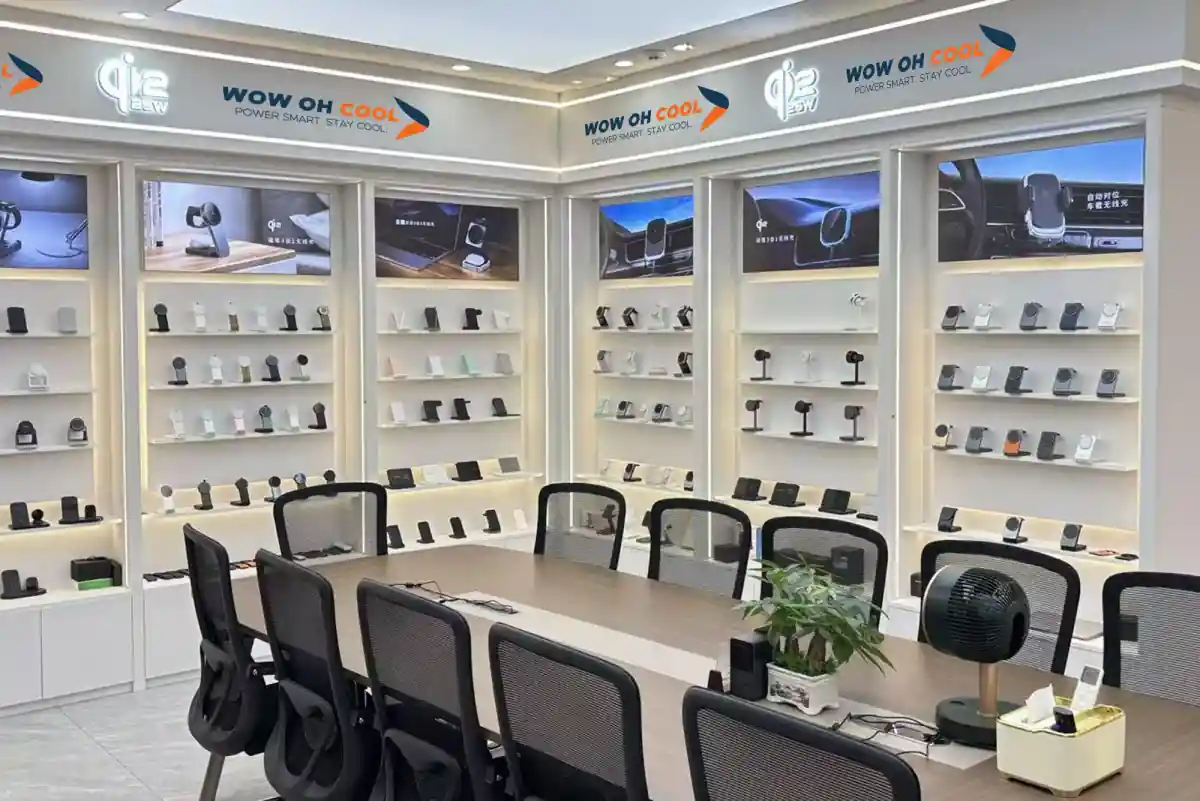
WOWOHCOOL OEM team reviewing 2027 product roadmap: GaN V, Qi2.2, and semi-solid-state — the technology bets that separate category leaders from followers
EXPERT INSIGHT
"The buyers who win in 2027 are the ones making technology bets now, not waiting for cost curves to bottom out. GaN V and Qi2.2 are no longer premium differentiators; they are the baseline. The real differentiation opportunity is semi-solid-state batteries, where a 2,000-cycle lifespan changes the value proposition from 'disposable accessory' to 'durable good.' That is a story retailers can sell at higher margin."
, Snowy May, Market Manager at WOWOHCOOL
8. Frequently Asked Questions
Wireless charging market size 2026, is there still room for new OEM brands?
The global wireless charging market reached $18.4 billion in 2026, growing at 24.2% CAGR toward $83.8 billion by 2033 (Coherent Market Insights/Fortune Business Insights). Qi2.2 (25W) is the fastest-growing segment at 38% CAGR. With 69.6% of new WPC certifications at 25W, the market is shifting upward but far from saturated, room remains for brands entering with differentiated Qi2.2 25W products, particularly in automotive (46.7% CAGR) and multi-device 3-in-1 stations.
Which phones support Qi2 15W+, should OEM brands stock both Qi2 and Qi2.2?
iPhone 16 and 17 series support Qi2 15W with iOS 26 enabling full Qi2.2 25W. Samsung Galaxy S26 supports Qi2-Ready (magnetic case required). Google Pixel 2026 supports Qi2 15W natively. For OEM inventory planning: stock Qi2 15W as the volume baseline (compatible with all Qi2 phones), add Qi2.2 25W as the premium tier for iPhone 17/Pro and flagship Android. Do not stock original Qi (5W, no magnets), it is obsolete for new OEM products in 2026.
Should OEM brands switch to Qi2.2 25W now or wait, what's the price difference vs Qi2 15W?
Qi2.2 doubles maximum wireless charging power from 15W to 25W while maintaining Qi2's Magnetic Power Profile (MPP) alignment. Hardware changes required: upgraded coil modules with tighter coupling tolerances, new thermal management ICs handling 67% more heat, and chipsets supporting the extended power profile. The BOM adder is $1.50-3.00/unit for Qi2.2 vs Qi2. OEM strategy: launch Qi2 for volume SKUs now, target Qi2.2 for premium SKUs shipping Q4 2026+. Qi2.2 certification velocity (637 products as of Feb 2026 with 69.62% at 25W) signals this will be the de facto standard within 12-18 months.
Are semi-solid-state battery power banks commercially available for OEM procurement?
Yes, semi-solid-state power banks entered mass production in 2026. BMX (SolidSafe Air) ships at 6.8mm thickness. ELECOM (DE-C85-5000) launched with a 2,000-cycle lifespan, 4× longer than traditional Li-polymer. These cells offer 30% higher energy density and near-zero thermal runaway risk compared to standard Li-polymer. OEM MOQ: 500-1,000 units, FOB 2-3× Li-polymer but commands 2-3× retail premium ($60-100+).
What five technology trends should B2B buyers prioritize for 2026-2027 OEM planning?
(1) GaN V is now the baseline above 45W, multi-port configurations with ≥92% efficiency are standard. (2) Qi2.2 25W replaces 15W as the default magnetic charging tier. (3) Semi-solid-state batteries enter commercial production with 2,000-cycle lifespan. (4) USB-C PD 3.2 mandates AVS + FRS for all new >27W certifications. (5) CCC traceability QR codes become mandatory for China-market products. OEM brands should audit current SKUs against these five baselines immediately.
What is China's new CCC traceability QR code and how does it affect OEM procurement?
Starting 2026, China's CCC (China Compulsory Certification) for power banks and chargers requires a unique traceable QR code on every product linking to manufacturing batch data, cell origin, and certification validity. For OEM buyers: non-CCC-certified power banks are prohibited from production, sale, and export from China. Verify your factory has CCC-certified product lines, non-compliant factories face shutdown. Amazon and EU customs increasingly check CCC QR validity for China-origin power banks. WOWOHCOOL products carry full CCC certification with traceable QR codes.
What should B2B buyers budget for new technology adoption in their 2026-2027 OEM product lines?
GaN V charger OEM: MOQ 500 units, FOB $5-8/unit at 65W. Qi2.2 wireless charger: WPC certification $3,000-8,000, 10-17 weeks timeline. Semi-solid-state power bank: MOQ 500-1,000, FOB $14-22/unit for 10,000mAh (2-3× Li-polymer but 2-3× retail premium). Total launch budget for a 3-SKU line (GaN charger + Qi2 pad + power bank): approximately $15,000-35,000 including tooling, certification, samples, and first production deposit.
How do OEM buyers plan their charging accessory product line for 2027?
Three-phase roadmap: Phase 1 (Q3 2026), audit your current SKUs against the 2026 baseline (GaN V above 45W, Qi2.2 25W, USB-C PD 3.2). Phase out silicon-only chargers and non-Qi2 wireless products immediately. Phase 2 (Q4 2026), launch GaN V multi-port chargers as volume drivers and Qi2.2 magnetic power banks as premium differentiators. Phase 3 (Q1-Q2 2027), add semi-solid-state power banks to the premium tier. WOWOHCOOL provides OEM/ODM across all five technology trends with MOQ from 500 units. Request 2027 product line planning consultation.
Market Manager · Wireless Charging & Market Analysis
10+ years experience in wireless charging and power bank market analysis. Market Manager at WOWOHCOOL tracking global trends in GaN, Qi2, and battery technology.
Factory Footprint
ISO 9001 Facility
Shenzhen, China
Export Countries
Engineers In-House
WOWOHCOOL Factory Data: 2026 Order Trends
Market forecasts are directionally useful, but factory order books tell the real story. Here is what WOWOHCOOL's production floor is seeing in 2026, based on 200+ OEM/ODM clients across 30+ countries:
Ready to Plan Your 2027 Charging Product Line?
WOWOHCOOL offers GaN V, Qi2.2, and semi-solid-state OEM/ODM with MOQ from 500 units. Full certification and custom branding included.
Sources & References
- Persistence Market Research, GaN Chargers Market Forecast 2026-2033 (Apr 2026)
- The Business Research Company, Mobile Phone Power Accessories Market Report (Jan 2026)
- Wireless Power Consortium, Qi2/Qi2.2 Certification Data (Feb 2026)
- Counterpoint Research, Global GaN Charger Market Share (2025)
- USB-IF, USB Power Delivery 3.2 Specification / IEC 62680-1-2:2026
- The American Ceramic Society, Solid-State Batteries at CES 2026
- Guru3D, ELECOM Semi-Solid-State Power Bank (2026)
- Moneycontrol, Ambrane Semi-Solid Battery Technology (Apr 2026)
- ISCCC, CCC Certification Mark QR Code Implementation Notice (Mar 2026)
- BMX SolidSafe Air at CES 2026
- Digital Trends, Samsung Galaxy S26 Qi2-Ready (2026)
Start Your Project
Ready to Source
from the Factory?
Get a custom quote for OEM/ODM charging products. Our engineers respond within 4 hours.
Or call us directly: +86-186-2078-9739