
OEM vs ODM: The Ultimate Guide for Power Adapter Brands

Global Procurement & Sourcing Manager · 10+ years in OEM/ODM Sourcing
Starting a charging accessories brand? One of the most critical decisions you'll face is choosing between OEM (Original Equipment Manufacturing, you provide the design, the factory builds it) and ODM (Original Design Manufacturing, the factory provides ready-made designs you brand as your own). Your choice determines your supply chain efficiency, time-to-market, and ROI.
Key Takeaways
Choosing between OEM and ODM is the single most consequential decision for any charging accessories brand. ODM offers fast market entry at moderate MOQ (500-1,000 units, under $20K); OEM delivers full design control and IP ownership ($50K+); hybrid balances both.
- ODM = speed + low risk. Pre-certified factory platform, 6-10 week timeline, MOQ 500-1,000 units, branding NRE $500-3,000. Best for first-time brands and Amazon sellers.
- OEM = control + IP ownership. Your design, your specs, your certifications. 10-16 week timeline, MOQ 3,000+ units, total upfront $50,000-200,000+. Unit cost 10-25% lower than ODM at scale.
- Hybrid = sweet spot for scaling brands. Start ODM, add selective custom tooling. $5,000-15,000 investment, 8-12 week timeline. You own the molds you paid for.
- Hidden costs to budget: design revisions ($500-2,000/ea), CE/FCC/RoHS certification ($2,000-4,000), custom packaging ($1,000-5,000), import duties (6-25%).
Table of Contents
1. OEM vs ODM: At-a-Glance Comparison for B2B Buyers
OEM means you own the design, the factory executes your specs. ODM means the factory owns a proven design, you brand and sell it. For procurement teams, the decision comes down to budget, timeline, IP control, and product differentiation. Here is the full comparison:
| Factor | OEM (Your Design) | ODM (Factory Design) |
|---|---|---|
| Design Control | 100%, you specify every component | Branding, colors, packaging only |
| Initial Tooling Cost | $10,000 - $50,000+ | $0, factory owns the tooling |
| Design IP Ownership | You own all IP rights | Factory retains base design IP |
| Development Timeline | 45-90 days (incl. tooling & prototyping) | 20-35 days (branding & sample approval) |
| MOQ per SKU | 3,000+ units | 500 - 1,000 units |
| Unit Cost at Scale | Lower (no factory R&D amortization) | Slightly higher (R&D baked into unit price) |
| Technical Expertise Required | High, you spec BOM, firmware, testing | Low, factory handles engineering |
| Product Differentiation | Unique, competitors cannot replicate | Base design may be shared with other brands |
| Best For | Established brands, proprietary tech, >$50K budget | Startups, Amazon FBA, market testing, <$20K budget |
Choose OEM When
- You have detailed specs (2D/3D drawings, BOM) ready
- You need complete design and IP control
- Budget >$50K for tooling + development
- You have engineers who can communicate specs to the factory
- Competing on unique features, not price
Choose ODM When
- Fast time-to-market matters (3-6 weeks to launch)
- Budget <$20K, no tooling investment needed
- First-time importer testing a product category
- MOQ flexibility matters (500-1,000 units to start)
- Speed and cost beat product uniqueness
Not sure? A hybrid approach, ODM base model + selective OEM customizations (exclusive color, custom packaging, upgraded cells), delivers differentiation without full OEM tooling costs. MOQ 500, 6-8 week timeline. See Section 4: The Hybrid OEM/ODM Approach for cost breakdowns and real-world examples.
EXPERT INSIGHT
"Most first-time importers default to ODM because it's faster and cheaper upfront. But here's what the per-unit price doesn't show: with ODM, you're competing on Amazon against 20 other sellers with the identical product. With OEM, even a 20% design differentiation, a unique port layout, a custom LED, a branded texture, can be the difference between a race to the bottom and a defensible brand. The math changes when you think beyond the first order."
, Nina Nico, OEM Technical Lead at WOWOHCOOL
2. What MOQ Should You Expect for OEM vs ODM?
QUICK ANSWER
ODM typically starts at 500-1,000 units per SKU because factories use pre-certified platforms with shared tooling costs across clients. OEM requires 1,000-5,000+ units to justify custom tooling investment. You can negotiate lower MOQs by committing to repeat orders or paying tooling fees upfront (WOWOHCOOL, 2026).
Minimum Order Quantity (MOQ) is often the deciding factor for startups and small businesses. Understanding how MOQs work in each model helps you plan inventory and cash flow realistically.
OEM MOQ Structure
Standard Products
1,000 - 2,000 units per SKU
Custom Configurations
2,000 - 5,000 units (different colors/options add up)
Custom Electronics
3,000 - 5,000+ units (PCBA tooling costs)
Tooling Amortization
Higher MOQ = Lower per-unit cost. Factory often requires higher MOQ to justify custom tooling investment.
ODM MOQ Structure
Standard SKUs
500 - 1,000 units per SKU
Custom Colors
500+ units (new color = new batch)
Custom Packaging
1,000 - 2,000 units (print runs)
Mix & Match Options
ODM factories often allow mixing models within the same order to reach MOQ, reducing inventory risk.
How to Negotiate Lower MOQs
- Commit to repeat orders: Offer a 6-month roadmap showing projected volumes
- Pay tooling upfront: Reducing factory's risk often lowers their MOQ requirements
- Accept longer lead times: Factories can combine your order with others for lower MOQ
- Bundle multiple SKUs: One product at 300 units + another at 200 = 500 total, meeting MOQ
- Start with ODM, graduate to OEM: Test market with ODM, then invest in custom tooling
Need help calculating MOQ requirements for your project? Contact our team for a personalized assessment.
3. How Do You Protect Your IP When Manufacturing Chargers in China?
Protecting your intellectual property is paramount when manufacturing in China. The risks differ significantly between OEM and ODM models, and you need appropriate safeguards for each.
Understanding the Risks
OEM Risks
- , Your designs could be leaked to competitors
- , Factory may produce extra units and sell elsewhere
- , Component suppliers may sell to others
- , Reverse engineering by factory staff
ODM Risks
- , Factory may offer your design to other buyers
- , Limited legal recourse for similar products
- , You don't own the base design patent
- , Competitors may source identical products
Essential Protection Strategies
Register Trademarks in China First
File your trademark with CNIPA (China National Intellectual Property Administration) before production begins. China operates on "first-to-file" principle. Without registration, you have limited legal standing. Cost: $150-$300 via professional agent.
Use NNN Agreements
NNN (Non-Disclosure, Non-Use, Non-Circumvention) agreements are stronger than standard NDAs in China. They prevent the factory from using your information, sharing with competitors, or circumventing you to work with your suppliers. Always use legally enforceable IP agreements.
Register Design Patents
For OEM products, file design patents in China and your target markets. A design patent protects the unique appearance of your product and gives you legal grounds to stop copycats. Process takes 6-12 months but provides long-term protection.
Factory Due Diligence
Verify factory credentials before signing contracts. Check for ISO 9001 certification, business license, export history, and client references. Third-party verification agencies like QIMA or BV can conduct audits.
Exclusive Supply Agreements
Include exclusivity clauses in your contract, specifying that your tooling (custom molds and production tools) and designs cannot be used for other clients. Pay premium for exclusivity if necessary. This is standard practice for managing supply chain risk.
WOWOHCOOL's IP Commitments
- , All clients receive NNN agreements before sharing designs
- , Factory floor access restricted and monitored
- , Employee non-disclosure agreements in place
- , Exclusive production slots available for premium clients
- , Third-party security audits conducted annually
4. The Hybrid OEM/ODM Approach (and When OBM Makes Sense)
Many successful brands don't choose one or the other, they combine OEM and ODM elements strategically. This hybrid approach offers the best of both worlds: faster time-to-market with meaningful product differentiation.
What is Hybrid Manufacturing?
You start with an ODM base design, then invest in custom tooling for specific differentiating features. The core product uses proven engineering, while unique elements create brand distinction. Common starting points: a 2-in-1 power bank + wall charger with custom housing, or a heated apparel battery with custom connector and voltage tuning.
How Hybrid Works in Practice
Select Base ODM Design
Choose an ODM product that closely matches your requirements. For example, a standard 3-in-1 wireless charger from the factory's catalog.
Identify Differentiating Features
Determine what makes your product unique. Common differentiators: proprietary charging protocol, exclusive form factor, integrated smart features, premium materials, or unique use case design.
Invest in Selective Tooling
Only pay for tooling on components you'll customize, perhaps a unique housing mold or custom PCBA. Leave the proven elements (PCB, coils, connectors) as standard.
Full Branding Package
Complete ODM customization: logo, colors, packaging, accessories, manual design. This creates brand identity even with shared core technology.
Hybrid Cost Comparison
| Approach | Tooling Investment | Timeline | MOQ | Differentiation |
|---|---|---|---|---|
| Pure ODM | $500-$2,000 | 3-4 weeks | 500 units | Branding only |
| Hybrid | $5,000-$15,000 | 6-8 weeks | 500 units | Moderate-High |
| Pure OEM | $15,000-$50,000+ | 10-14 weeks | 1,000+ units | Maximum |
When to Use Hybrid
Hybrid is ideal when: you have a unique selling proposition that can be implemented with targeted tooling; you want to test market response before full OEM investment; you need to differentiate from competitors using similar ODM products; or your target MOQ falls between typical ODM and OEM ranges.
What About OBM? When You Outgrow OEM
OBM (Original Brand Manufacturing) is the next step beyond OEM: the factory designs, manufactures, AND markets under its own brand. Most charger brands operate as OEM or ODM clients of factories like WOWOHCOOL, they do not become OBM unless they own the entire value chain (R&D, production, distribution, marketing).
- OEM client: you own the brand and design; factory manufactures.
- ODM client: you own the brand; factory designs and manufactures.
- OBM: you own the brand, design, manufacturing, AND distribution.
If you reach OBM scale, your tooling spend, certification portfolio, and supplier network will look more like ours, typically requiring 50+ R&D engineers and 5,000㎡+ of dedicated production floor. For most brands, OEM with WOWOHCOOL as the manufacturing partner is the optimal end state.
5. How Long Does OEM vs ODM Production Take? (Detailed Timeline)
Understanding production timelines helps you plan launches, marketing campaigns, and inventory. Here's a detailed breakdown for a wireless charger project.
Week 1-2: Initial Consultation
Both models: Requirements gathering, product specifications review, factory assessment, NNN signing
Week 2-4: Design & Tooling (OEM)
OEM: 2D/3D design finalization, mold creation, PCBA development
ODM: Skip to step 4
Week 4-6: Prototype Development (OEM)
OEM: First articles, internal testing, design revisions
ODM: Skip to step 4
Week 2-4: Sample Production (ODM) / Samples + Revisions (OEM)
ODM: Production samples with branding, color verification
OEM: Refined samples after prototype testing
Week 4-6: Sample Approval & Payment
Both: Final sample approval, payment arrangement, production scheduling
Week 6-8: Mass Production
ODM: 2-3 weeks for 500-1000 units
OEM: 4-6 weeks for 1000-3000 units (includes any mid-production adjustments)
Week 8-10: Quality Inspection & Shipping
Both: AQL inspection, packaging, customs clearance, shipment
7. Real-World OEM vs ODM Case Studies
Learning from others' experiences helps you avoid common pitfalls. Here are three brand journeys illustrating different manufacturing approaches.
Case Study: TechStart Electronics (ODM Success)
Startup: Launched with $15,000 budget in 8 weeks
$15K
Initial Investment
8 Weeks
Time to Market
500 Units
First Order
The Journey
TechStart wanted to launch a 3-in-1 wireless charger but had limited capital. They selected an ODM base from our catalog, customized with a unique matte black finish and premium packaging. They used Amazon FBA for fulfillment and achieved $45,000 in first-month sales.
Lessons Learned
- , Started with ODM to validate market demand
- , Invested profits into custom tooling for v2 product
- , Used unique packaging to differentiate from competitors
Case Study: PremiumCharge Pro (OEM Strategy)
Established brand: $150,000 investment for market leadership
$150K
Total Investment
14 Weeks
Development
5,000 Units
First Order
The Journey
PremiumCharge targeted the professional market with proprietary 100W charging protocol. They invested in full OEM development including custom IC design, unique housing with premium materials, and complete certification package. Their product now commands 40% higher margins than commodity competitors.
Lessons Learned
- , OEM investment justified by unique selling proposition
- , Protected IP with patents in 5 countries
- , Premium pricing supported by genuine differentiation
Case Study: GreenPower Eco (Hybrid Approach)
Mid-market: $35,000 for sustainable charging brand
$35K
Initial Investment
10 Weeks
Development
800 Units
First Order
The Journey
GreenPower wanted to enter the eco-friendly charging market. They selected an ODM base with biodegradable materials option, then invested in custom tooling for recycled plastic housing and FSC-certified packaging. This hybrid approach delivered sustainability story without full OEM costs.
Lessons Learned
- , Selective tooling investment for key differentiators
- , Sustainability messaging justified premium pricing
- , Hybrid approach balanced cost and differentiation
Case Study: Bosch 65W GaN Car Charger (OEM Fast-Track)
Real client: 10,000 units delivered in 25 days, zero defects
5 Days
Sample Approval
25 Days
Mass Production
10,000 Units
First Order, 0 Defects
The Journey
Bosch needed 10,000 units of 65W GaN car chargers on an emergency timeline ahead of a pre-sale campaign. WOWOHCOOL delivered samples in 5 days using existing GaN V tooling, then completed mass production in 25 days. Every unit passed our 4-stage QC (IQC, IPQC, FQC, OQC) plus the 4-hour 100% aging test before shipment. Zero defective units returned in the first 90 days.
Why OEM Worked Here
- , Bosch owned the proprietary protocol stack and PCBA design
- , ISO 9001 + 4-stage QC + 4-hour aging test gave Bosch the predictability OEM demands
- , Existing GaN V tooling absorbed the schedule pressure that would have killed a from-scratch OEM project
8. How to Negotiate with Charger Factories: Pricing, MOQ & Contracts
Strong negotiation skills can save thousands and establish productive long-term partnerships. Here are proven tactics from our decade of manufacturing experience.
Before Negotiations
- Research market prices: Know current material costs, competitor pricing, and typical MOQs
- Get multiple quotes: Always compare 3-5 factories before deciding
- Understand factory constraints: MOQs exist because of real costs, be respectful of their needs
- Prepare walk-away price: Know your maximum budget before starting
During Negotiations
- Start with smaller orders: Prove yourself before asking for volume discounts
- Bundle multiple products: Factories prefer larger orders, combine SKUs
- Offer payment milestones: 30% deposit, 40% approval, 30% shipment reduces factory risk
- Negotiate tooling ownership: You pay for it, you should own it, get this in writing
Common Negotiation Mistakes to Avoid
Don't Do This
- , Demanding the lowest price immediately
- , Revealing your target budget upfront
- , Threatening to walk away without intention
- , Comparing factories against each other publicly
- , Negotiating after signing the contract
Do This Instead
- , Build relationship before discussing price
- , Show genuine interest in partnership
- , Offer value (repeat orders, referrals)
- , Be transparent about concerns
- , Focus on win-win solutions
Key Contract Terms to Negotiate
Payment Terms
Standard: 30/70. Target: 30/30/40 (deposit/approval/shipment)
Tooling Ownership
Must specify: You own molds after final payment
Exclusivity Period
Negotiate 12-24 months exclusivity for custom designs
Quality Standards
Define AQL levels, inspection criteria, defect acceptance rates
Sample Costs
Pre-production samples should be credited against bulk orders
Volume Discounts
Lock in pricing tiers for 1K, 3K, 5K+ units
Quality charging products built through OEM/ODM partnerships with WOWOHCOOL
9. How to Choose Between OEM, ODM, and Hybrid (Decision Framework)
Use this structured approach to determine which manufacturing model fits your specific situation.
What's your total budget for this project?
Under $20K: ODM is your realistic option. $20K-$50K: Hybrid approach works well. $50K+: Full OEM becomes viable with significant product differentiation.
How unique does your product need to be?
Same function, better branding: ODM is sufficient. Unique features/technology: OEM required. Some differentiation, faster time: Hybrid is the answer.
What's your time-to-market requirement?
Under 2 months: ODM only. 2-4 months: ODM or Hybrid. 4+ months: Any model works with proper planning.
What's your order quantity?
Under 500 units: ODM required. 500-1,000 units: Hybrid possible. 1,000+ units: OEM becomes cost-effective.
Do you have technical expertise?
No engineering team: ODM, actory handles all technical decisions. Some technical knowledge: Hybrid works. Full engineering capability: OEM gives you maximum control.
Is IP protection critical?
Sharing base tech is acceptable: ODM. Need exclusive design: OEM with full IP protection. Some exclusive features: Hybrid with selective exclusivity.
Which One Should You Choose?
Our manufacturing consultants can help assess your specific needs, no obligation.
10. What WOWOHCOOL Offers
Why Brands Choose WOWOHCOOL
13+
Years of Manufacturing Excellence
500+
Brands Served Globally
99.2%
On-Time Delivery Rate
Quality Control & Testing Process
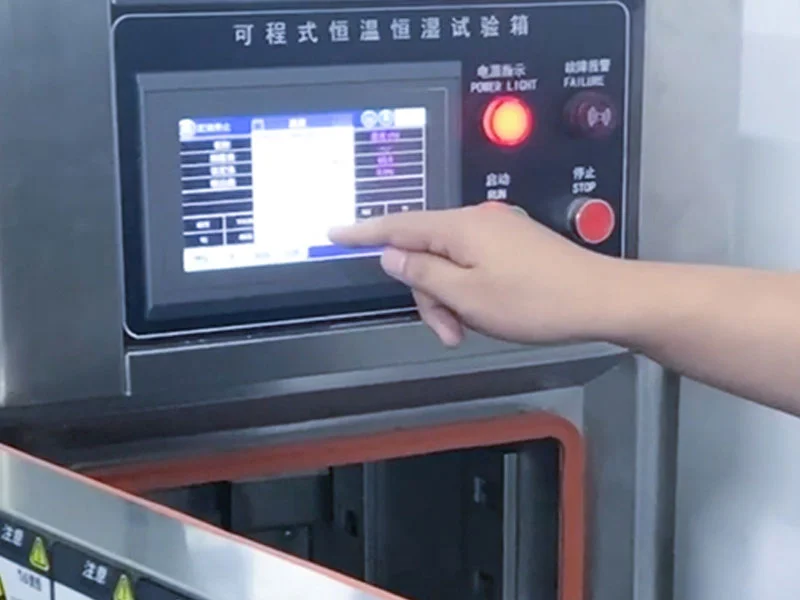
Thermal testing ensures safety under extreme temperatures
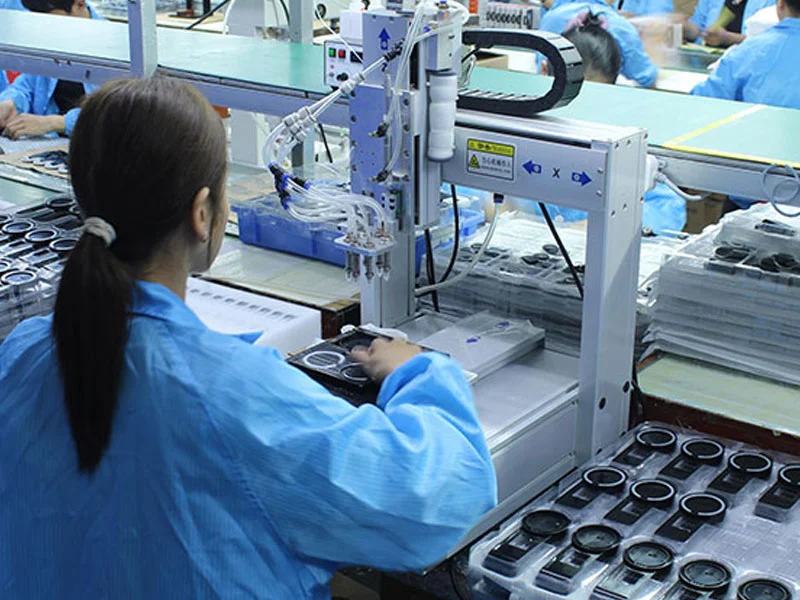
Wireless charging function testing for Qi certification
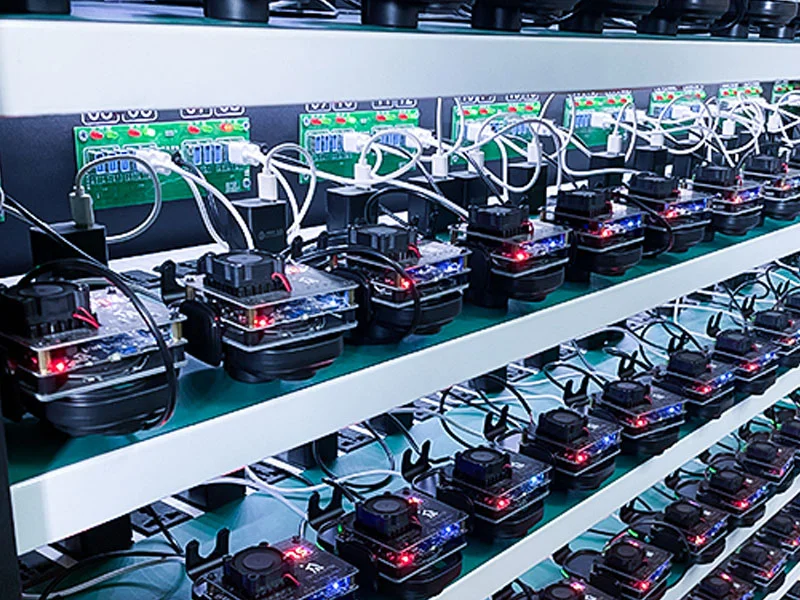
Aging test ensures long-term reliability and durability
WOWOHCOOL FACTORY STAT
WOWOHCOOL offers both OEM and ODM manufacturing, from 2-in-1 hybrid chargers to custom designs, with MOQ starting at 500 units, 25-30 day lead times, and 50+ R&D engineers. Since 2013, they have served 200+ global brands including Bosch and Jacob Jensen from their Shenzhen factory.
Learn how to identify legitimate manufacturing partners in our guide on how to choose a reliable China charger supplier. For a complete list of vetted partners, see our top power bank manufacturers in China ranking.
Frequently Asked Questions
What is the difference between OEM and ODM manufacturing?
OEM (Original Equipment Manufacturing) means you provide complete product specifications and the factory manufactures to your exact design. You own all intellectual property. ODM (Original Design Manufacturing) means the factory provides ready-made designs that you customize with your branding.
Which manufacturing model has lower MOQ requirements?
ODM typically has lower MOQ requirements because factories amortize tooling costs across multiple clients using the same base designs. ODM MOQs often start at 500-1,000 units per SKU from pre-certified factory platforms. Custom OEM with new tooling requires 3,000+ units.
How can I protect my IP when manufacturing in China?
Protect your IP by registering trademarks in China before production begins, using NNN agreements, registering design patents, conducting factory due diligence, maintaining exclusive supplier agreements, and working with certified manufacturers. Under Chinese IP law, trademark registration takes 12-18 months and design patents 6-12 months. Always file BEFORE sharing specs with the factory. Use an NNN agreement (separate from NDA), register IP in China first (first-to-file jurisdiction), and split production across 2-3 factories for critical components. For tooling, sign a Mold Ownership Agreement stating the mold belongs to you, not the factory, even if stored on their premises.
How long does each manufacturing model take?
ODM takes 6-9 weeks from inquiry to shipment (existing platform, fastest). OEM takes 10-14 weeks for full custom development including tooling, sampling, and certification. Hybrid takes 8-12 weeks. These timelines assume smooth communication, no major design revisions, and standard CE/FCC certification requirements. Complex products or extensive certifications can add 4-8 weeks.
What hidden costs should B2B buyers budget for OEM vs ODM charger production?
Hidden costs include: design revisions ($500-$2,000 each), CE/FCC/RoHS compliance testing ($3,000-$10,000), custom packaging setup ($1,000-$5,000), import duties (6-25%), AQL inspection ($300-$800), and annual mold maintenance ($500-$2,000 per mold). Always request a complete cost breakdown before signing contracts.
Global Procurement & Sourcing Manager · Wireless Charging Specialist
Nina Nico is a supply chain management expert with 10+ years experience helping global B2B clients navigate OEM/ODM manufacturing with WOWOHCOOL, a premium charging solution specialist in Shenzhen, China since 2013, offering flexible MOQs starting at 500 units. She holds a degree in International Trade and is a certified supply chain professional (CSCP), with deep expertise in Qi2, GaN, and semi-solid-state battery manufacturing.
Factory Footprint
ISO 9001 Facility
Shenzhen, China
Export Countries
Engineers In-House
Ready to Start Your OEM or ODM Project?
WOWOHCOOL offers flexible OEM and ODM manufacturing with MOQ starting at 500 units. Get factory-direct pricing with full certification support.